


2023-03-29 00:00:00
SUBACROMIAL BURSITIS
The subacromial bursa is a fluid sac, with a lubricating role, which is located between the acromion bone and the tendon ...


Diastasis or abdominal dehiscence is a condition in which the abdominal muscles are separated due to the laxity (widening) of the white line. The white line is mostly composed of the connective tissue of collagen, which has a white appearance, hence the name and separates the right abdominal muscles from the left ones. In people with well-developed abdominal muscles, the white line can be seen on the skin, forming a depression between the left and right halves of the six-pack.
Abdominal diastasis presents itself as a space of about 2.7 cm or more, space that stretches from the head of the sternum to the navel and which becomes more evident by straining the abdominal muscles.
Abdominal diastasis is common among pregnant women (about 30% of pregnant women have abdominal diastasis) or among people who have large variations in weight.
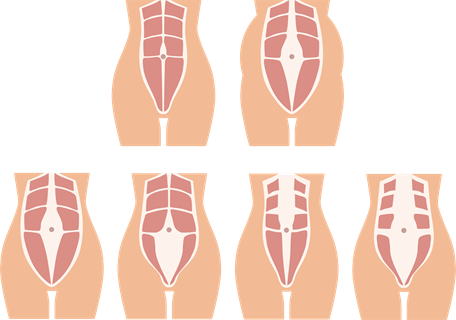
Also called abdominal rectus diastasis (the abdominal muscle is known as the abdominis rectus muscle and is a straight paired muscle), abdominal diastasis should not be confused with ventral hernia. Ventral hernia manifests itself as an opening in the muscles of the abdominal wall. Although it is a hole, it also produces a bulge that is usually visible on the center of the abdominal wall.
Abdominal diastasis can also be congenital, but it is most commonly acquired during pregnancy and/or higher weight gain, causing white line laxity.
Not all people with abdominal diastasis have symptoms. When present, however, symptoms include pain and discomfort in the abdomen, musculoskeletal problems such as pelvic instability and back pain in the lumbar area.
In more severe cases, uro-genital symptoms such as urinary incontinence and pelvic organ prolapse may also occur.
1. PHYSICAL THERAPY
If abdominal diastasis occurs during pregnancy, the recovery program through physical therapy should begin at 6-8 weeks after birth.
Thus, physical exercise aims to:
➢ toning (strengthening) the abdomen
➢ toning the pelvic floor muscles
➢ toning the lower back
➢ re-education of posture
Avoid lifting heavy weights.
Wearing a supporting bodice for the abdominal muscles can support the recovery process.
2. SURGICAL TREATMENT
If physical therapy fails to reduce diastasis and the discomfort is severe, surgery is an optimal treatment option.
In the case of women who have developed abdominal diastasis during pregnancy, surgery is not recommended earlier than 6-12 months post-partum, because during this time diastasis could heal by itself. Surgical options include open assisted surgery, laparoscopic or robotics.
Exercises are recommended to tone the body before pregnancy and their continuation, at a much lower level in the first 2 trimesters of pregnancy.

I always follow professional workflow and provide you the best service with reliable costs.



The subacromial bursa is a fluid sac, with a lubricating role, which is located between the acromion bone and the tendon ...
Burnout syndrome or professional burnout syndrome is a state of exhaustion, both physical and mental, which ...
The anterior cruciate ligament can suffer injuries when the knee joint is pushed back, twisted or pushed from side ...