

2023-03-07 00:00:00
WHY DO CALVES HURT?
The calf is the part of the foot located between the knees and the foot. The skeleton of the calf consists of two bones ...


The transverse process fracture is a serious injury, but life-threatening.
It can occur in any vertebra of the spine, but the thoracic and lumbar areas (the middle part of the back and its lower part) are more at risk.
Known as the "broken back" or "fractured vertebra", this fracture is often caused by car accidents or a fall from a great height, when a rotation or an extreme lateral bending occurs. Most of the time, it does not affect the stability of the spine but there is a risk that it will be associated with other serious injuries, due to the high impact.
Most of the time, the transverse process fracture does not affect the spinal marrow, except in the case of large traumas in which other vertebrae have been fractured or dislocated.
Men are more exposed to the fracture of the transverse process four times more often than women. The elderly are also sensitive to these lesions due to the decrease in bone density.
➢ 33-34 vertebrae that are all stacked on top of each other.
The first 24 upper vertebrae (7 cervical, 12 thoracic and 5 lumbar) are articulated and separated from each other by intervertebral discs while the 5 sacral vertebrae are welded to each other and the 4-5 coccygeal vertebrae are united.
➢ The vertebral canal - vertebrae connect to each other to create a channel (vertebral canal) that houses and protects the spinal marrow

➢ The spinal nerves, which travel along the vertebral canal to carry messages between the muscles and the brain.
➢ The ligaments, nerves, muscles and intervertebral discs are all additional components of the spine
The spine has 4 physiological curvatures, namely: cervical, thoracic, lumbar and sacro-coccygeal. These curvatures increase the strength and elasticity of the spine.
The TRANSVERSE PROCESS is a small bone projection on the right and left sides of each vertebra. The two transverse processes of each vertebra function as a place of attachment for the muscles and ligaments of the spine, as well as for the point of articulation of the ribs (at the level of the thoracic spine).
There is also a projection of the bone that extends from the back of the vertebra, called the SPINOUS PROCESS.
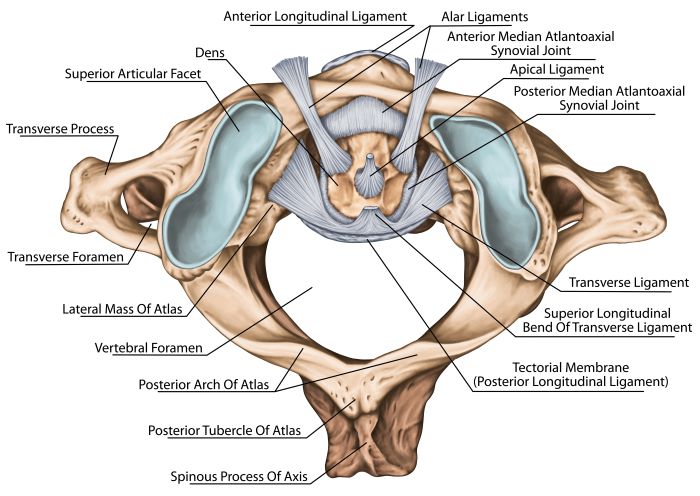
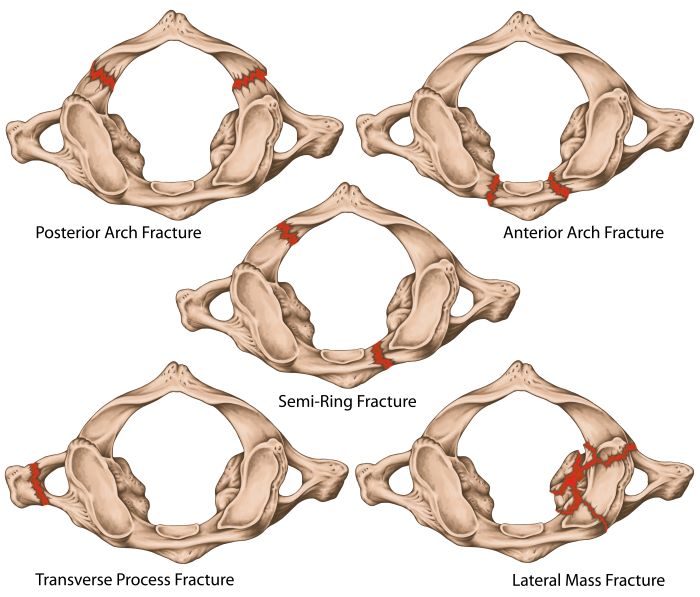
Most of the spinal injuries can be helped by wearing an orthosis, in the case of a transverse process fracture, for six to twelve weeks.
Starting a recovery exercise program, with the gradual increase of the intensity and degree of loading, is useful for:
➢ pain reduction
➢ increased flexibility and mobility of the spine
➢ toning the paravertebral muscles
➢ prevention of other injuries
It is necessary in several particular situations, when:
➢ the height of the vertebral body is severely lost
➢ bending or rotation its excessive at the site of injury
➢ significant nerve damage of the vertebral body or pinching of intervertebral discs
➢ the presence of several fragments of fracture
In the cases mentioned above, the spinal canal must be decompressed and stabilized. Decompression often involves the removal of bones or other components that put pressure on the spinal cord
➢ the recovery program through physical therapy is essential regardless of whether surgery was required or not.
➢ recovery through physical therapy helps to reduce pain, regain movement and resume activities prior to the injury
➢ if severe pain occurs that worsens with movement, it must be evaluated.

I always follow professional workflow and provide you the best service with reliable costs.



The calf is the part of the foot located between the knees and the foot. The skeleton of the calf consists of two bones ...
Osteoarthritis is a condition in which the natural cushioning in the joint disappears due to damage to the cartilage ...
While practicing a sport, one or more of the components of the musculoskeletal system may suffer injuries, the ...