

2023-03-13 00:00:00
FRACTURE OF THE HUMERUS BONE
The humerus is one of the three bones that form the elbow joint, along with the radius and ulna. Together, they bend and ...


The patellar tendon, which connects the patella (kneecap) to the tibia, along with the muscles located in the anterior part of the thigh, helps to straighten the leg. Rupture of the patellar tendon is more common in middle-aged people, who are involved in jumping or running games and manifests with a sudden onset of pain and difficulty walking. In a complete rupture, the ability to extend the knee is low. Injury to the patellar tendon generally requires significant force, such as falling directly on the knees or jumping from a height or a previous degeneration or inflammation of the knee. There are two main types of ruptures: partial and complete, the correct diagnosis being based on both physical examination and medical imaging.
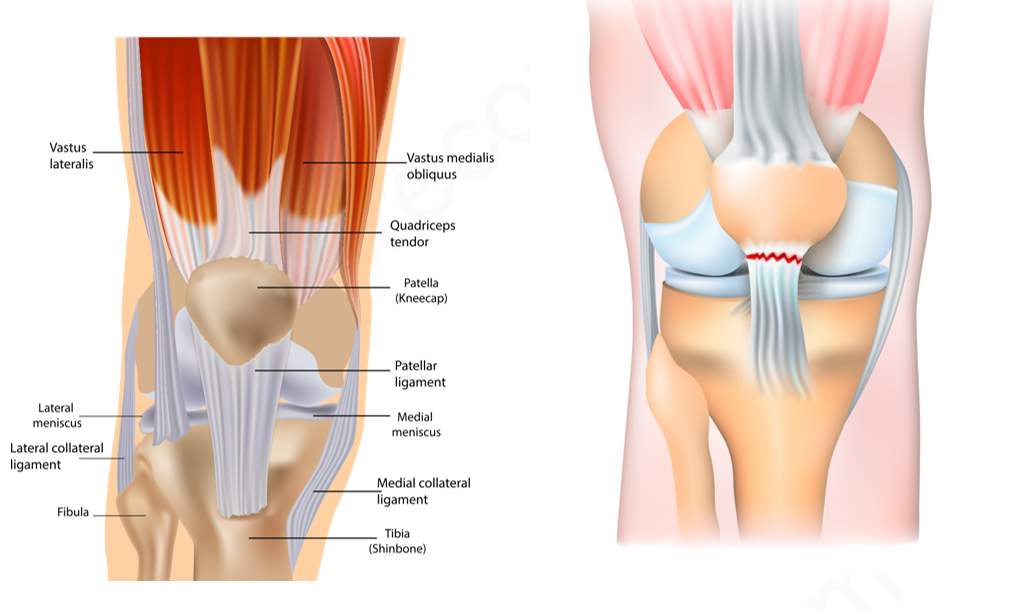
The patella or kneecap is a short, round, flattened antero-posterior bone that is part of the knee skeleton. It is located at the lower extremity of the femur and is developed in the thickness of the tendon of the quadriceps muscle.
The patellar tendon is basically the terminal extension of the quadriceps muscle in the leg. The four muscles that make up the quadriceps, each offer a tendon that attaches to the patella (kneecap). The quadriceps tendon becomes thicker and narrower as it moves from the patella to the tibia and is called the patellar tendon because it starts from the patella and ends at the tibia.
The sign of a torn patellar tendon is the movement of the patella upwards on the quadriceps. When the rupture occurs, the patella loses its support from the tibia and moves towards the hip when the quadriceps muscle contracts, preventing the ability of the foot to expand and the possibility of maintaining the orthostatic position (in the legs).
The patellar tendon is essential in allowing a person to straighten the leg. When the quadriceps contracts, the force is transmitted through the quadriceps tendon and the patellar tendon, using the patellar as a fulcrum, thus straightening the leg. If any connection in this chain is interrupted, either
by a rupture of the quadriceps tendon or by a rupture of the patellar tendon, a patellar fracture or the inability to contract the quadriceps muscle, the leg cannot extend from the knee.
1. Immobilization
Wearing a plastered orthosis or splints for 3 to 6 weeks is useful to keep the right knee in the healing phase. Movement will be carried out with the help of crutches to avoid placing weight on the affected leg. Certain exercises, with the knee stretched, can be done during the immobilization period, under the guidance of a physical therapist.
2. Physical therapy
Specific exercise programs will help restore the range of movements, as well as the resistance of the knee. It will also aim to prevent the post immobilization stiffness, as well as to increase the flexibility of the knee joint.
Athletes are more at risk of rupturing the patellar tendon, especially athletes who take anabolic steroids to increase their performance. Steroids can weaken the tendon and increase the risk of rupture. Surgical restoration of the torn tendon may be a treatment option for athletes.
Surgery
Although it is not an emergency, it must be performed shortly after the injury occurs. This allows for easier recovery, before a significant accumulation of scar tissue. Most surgeons perform a direct recovery of the tendon, if it is broken in the middle. If the tendon is torn from the bone, several different techniques can be used, such as reattaching the tendon to the bone with a combination of sutures and bone tunnels.
Postoperative recovery
Postoperatively, the recovery program is started with the initiation of the knee flexion movement, continuing with exercises that aim to:
✓ Prevent joint stiffness
✓ Increase the tone of the stabilizing muscles of the knee
✓ Increase the stability of the knee
6 weeks after surgery, you can walk without crutches.
Usually, a return to sports activities is postponed until 4-6 months after surgery, depending on the strength of the foot after recovery but also depending on the type of sport.
ADVICE:
✓ Be cautious when landing after a jump, if the knee is bent during contact with the ground, the patellar tendon may break.

I always follow professional workflow and provide you the best service with reliable costs.



The humerus is one of the three bones that form the elbow joint, along with the radius and ulna. Together, they bend and ...
Thoracic intervertebral contracture is also known as the sprain of the articular facet because the intervertebral ...
Upper crossed syndrome is a condition associated with people who have a bad posture, presenting pain ...