


2023-03-14 00:00:00
JOINT COMPLICATIONS CAUSED BY DIABETES MELLITUS
Diabetes mellitus is a chronic condition that affects the way the body uses blood sugar (glucose). Glucose is essential ...


As time passes, the articular cartilage - an unvascularized tissue that covers the bone components of the joint, deteriorates. Its main functions are to enable a good articulation (it ensures minimal friction inside the joint) and to cushion the shocks to which the joint is subjected.
The synovial fluid - the important component of the joints, is also affected, which, along with the cartilages, has the role of attenuating shocks and preventing bone wear when joining. The synovial fluid is viscous and transparent and contributes to the wetting of the surfaces of the movable joints. Thus, by damaging the two articular components, the joints become more rigid and the solution is exercise. Synovial fluid requires movement to keep the joints moving.
The joints tend to be stiffer in the morning, because during sleep, synovial fluid cannot do its job. Thus, we can wake up with stiffer and more swollen knees or hands. To prevent this, we can exercise more during the day.
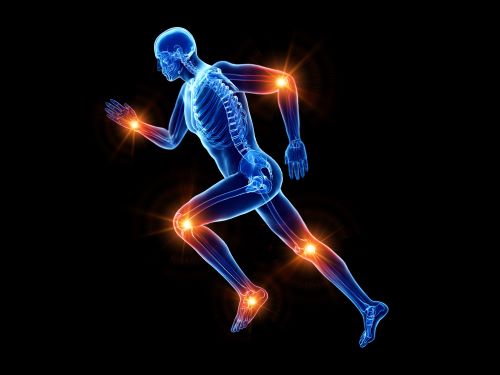
Osteoarthritis is a condition in which the natural cushioning in the joint disappears due to damage to the cartilage and tissue that covers the bone ends that form that joint. Whenever this happens, the bones within the joint end up rubbing closely against each other, causing swelling, pain, stiffness, decreased ability to move, as well as the formation of bone spurs.
Physical therapy, through toning exercises of the muscles around the affected joints, helps significantly increase the stability of the joint, while stretching exercises help increase the mobility and flexibility of the joint. The higher the degree of movement in the joint, the more inflammation and pain are significantly reduced.
Rheumatoid arthritis is an autoimmune disorder that involves inflammation of the joints. Autoimmune disorders occur when the body's immune system reacts/fights against tissues or substances naturally present in the body.
In Rheumatoid Arthritis, the body's immune system fights against the synovial membrane, which thus becomes inflamed and is associated with a decrease in the amplitude of movement in the affected joint.
Although it can affect any joint in the body, rheumatoid arthritis tends to start with stiffness and discomfort in a certain area, such as in the hands or feet. Stiffness in the joint is accompanied by redness and inflammation.
Being an autoimmune disorder, Rheumatoid Arthritis does not heal but the symptoms can be controlled by drug treatment with analgesics and anti-inflammatories that help control pain and inflammation. There are also disease-modifying anti-rheumatic drugs (DMARDs), also called non-biological therapy, as well as biological therapies, corticosteroids, etc. Physical therapy, specific exercise programs, performed daily have an important role in the management of Rheumatoid Arthritis.
It mostly affects the spine, but can also cause pain and stiffness in the hips, hands and/or feet.
It is a type of arthritis that causes sudden pain, a burning sensation, swelling of the joint and stiffness. Most of the time it affects the big toe. Untreated properly, these symptoms can return over time, and can affect other joints. Gout is caused by a large amount of uric acid in the blood, uric acid that leads to the formation of hard crystals in the joints.
People with psoriasis may also develop psoriatic arthritis, in which a skin disorder (psoriasis) is often combined with a joint inflammation (arthritis). The joints of the hands, fingers, feet, knees, but also other joints become rigid or trepidated and painful.
It is a disorder characterized by musculoskeletal pain spread throughout the body, accompanied by fatigue, sleep, memory and mood disorders. Researchers believe that in those who suffer from fibromyalgia, painful sensations are amplified in the brain and spinal marrow.
The bursae are located throughout the body, between the soft tissues and bones as small sacs with liquid with a lubricating role. When the bursa becomes irritated or inflamed, more fluid accumulates at the joint level and bursitis begins to develop.
Tendinitis, represents the inflammation of a tendon. When the tendons are subjected to excessive repetitive stress, as in the case of sports that involve repetitive movements, they can become weakened, favoring the inflammation.
The more we move our joints, the more we prevent the onset of stiffness.
But exercise also has other benefits, such as:
➢ muscle toning with a role in stabilizing the joints
➢ maintaining the bones strong
➢ improving the balance
➢ loss of excess kilograms
If your joints are very stiff in the morning, take a hot shower or bath. They will favor the dilation of blood vessels and circulation and movement will be improved.
If a rigid joint is both painful and inflamed, locally applied ice narrows the blood vessels (vasoconstriction), which slows down blood flow to the area and relieves pain and swelling. Always put a towel between the ice and the area on which it is applied.

I always follow professional workflow and provide you the best service with reliable costs.



Diabetes mellitus is a chronic condition that affects the way the body uses blood sugar (glucose). Glucose is essential ...
We don't need any special equipment or a subscription to a gym, or a partner, although walking with a friend has some benefits ...
The brain or the cerebrum is the part of the central nervous system located inside the skull ...