


2023-03-29 00:00:00
BREATH
Breathing is a physiological process by which organisms make an exchange of oxygen and carbon dioxide with ...


Diabetes mellitus is a chronic condition that affects the way the body uses blood sugar (glucose). Glucose is essential for health because it is an important source of energy for the cells that form muscles and tissues. It is also the main source of fuel of the brain.
High blood sugar levels, specific to diabetes, can also cause tendon problems. If diabetes is not kept under control, the tendons can thicken and become more likely to break and people with diabetes may feel pain when they move.
Tendons keep muscles and bones connected, transferring strength from muscles to bones, thus allowing joints to be flexible, to move
In type 1 and 2 diabetes, tendons are affected by some advanced glycation end products (AGEs) that are proteins or lipids that become glycated as a result of exposure to sugars. These advanced glycation final products are also involved in the development or worsening of many degenerative diseases such as diabetes, atherosclerosis, chronic kidney disease and Alzheimer's disease.
Glycation is the process by which sugar attaches to fiber and protein in the body. It is a natural process that starts from the age of 20, even if we have a normal glycemic index, but the diet rich in sugar accelerates the formation of AGEs molecules
AGEs affects almost every type of cell and molecule in the body and is believed to be a factor of aging and some age-related chronic diseases. It is also believed that it plays a causal role in the vascular complications of diabetes.
Normally, the body produces AGEs at a slow and steady pace. But in the case of diabetes, the extra sugar in the blood increases the speed of production of these proteins, which affects the tendons.
Tendons are made from a protein called collagen. AGEs forms a bond with collagen, which can change the structure of tendons and affect their functioning.
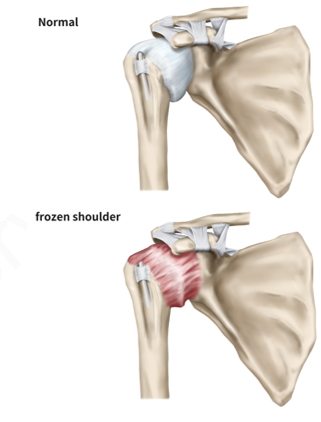
It represents the retraction (scarring) and thickening of the joint capsule, which surrounds the tendons and ligaments in the shoulder joint and manifests by the progressive loss of joint amplitude and by the appearance of pain.
Retractile capsulitis manifests itself with dull, persistent pain, which can be accentuated with movement or when the person sleeps on the affected shoulder, with the limitation of movement in the shoulder joint and the difficulty of performing movements, such as combing.
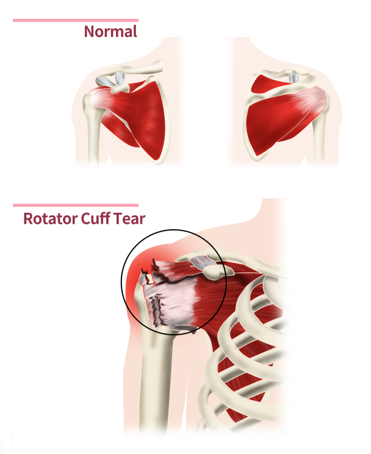
The rotatory sheath is a tendinous blade that covers the anterior, upper and posterior side of the shoulder joint capsule. It is composed of the tendons of 4 different muscles, namely the supraspinatus muscle, the intraspinales muscle, the small round and subscapular muscle. By the action of the rotatory sheath, the humeral head is maintained in the shoulder joint and ensures the rotation and lifting of the arm.
The dysfunctionality of the rotatory sheath allows the superior migration of the humeral head and the tendons of the muscles that make up the rotatory sheath can break if they are overworked or injured.
The ruptures of the rotatory sheath muscles seriously affect the functionality of the shoulder manifesting with intense pain and disability in the shoulder and arm. Of the four muscles of the rotatory sheath, the most exposed to injuries and rupture is the supraspinous muscle, which makes the abduction movement (lateral lifting) of the arm.
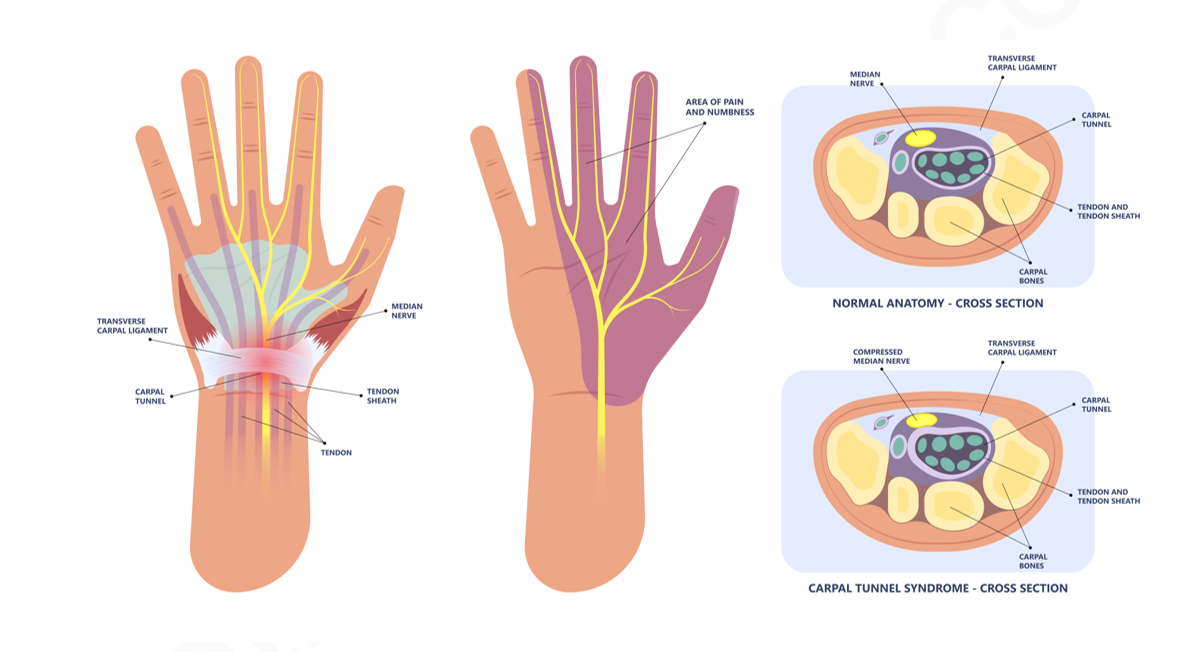
Carpal tunnel syndrome is caused by compression of the median nerve. The carpal tunnel is a narrow canal, surrounded by tendons, ligaments and bones. The median nerve, together with the nine tendons of the muscles that provide the flexion of the fingers, passes through the carpal tunnel and is responsible for the innervation of the big, index, middle fingers and part of the ring finger. The carpal tunnel syndrome occurs when the tissues surrounding the tendons in the wrist become inflamed (swell) and compress the median nerve. When the median nerve is compressed, symptoms may include numbness, tingling and pain and weakness in the hand.
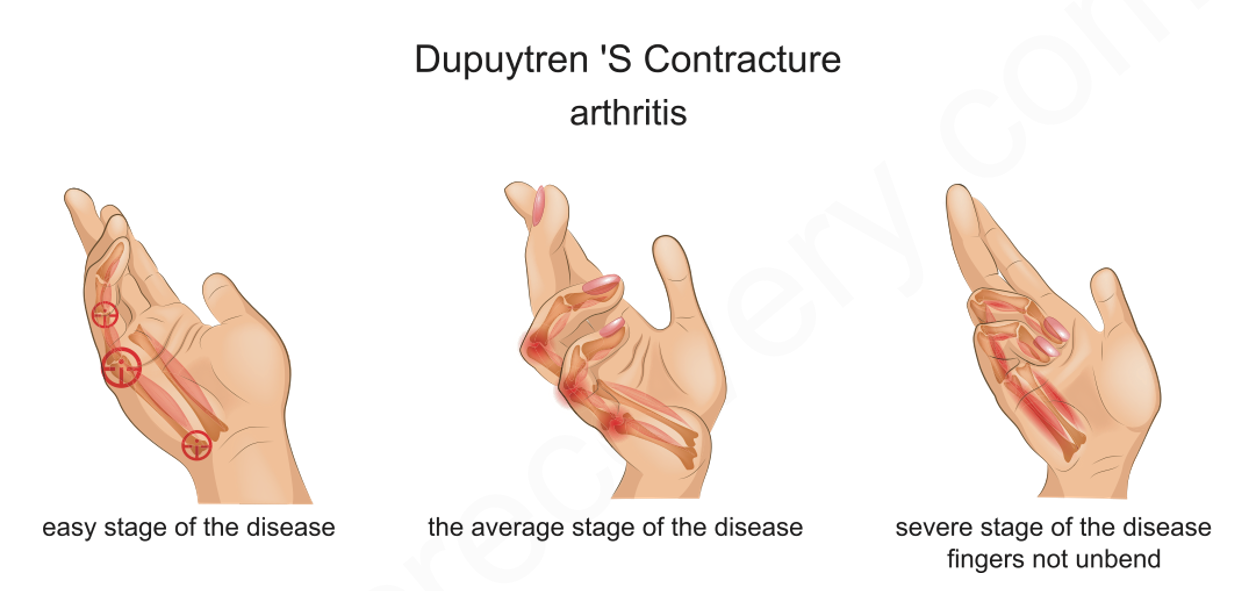
Dupuytren's contracture occurs when the layer of fibrous tissue in the palm and fingers thickens. Even if it is painless, Dupuytren's contracture can cause changes in the fingers, more precisely in their contracture and bending.
Dupuytren's contracture evolves slowly, begins at the level of the little finger and evolves towards the index finger and then towards the palm. It is not considered a serious condition, but certain functions of the hand can be lost and also the aesthetics of the hand is affected.
➢ The best way to avoid tendon problems is to keep diabetes under control. Blood sugar can be balanced with the help of diet, exercise and medications.
➢ Weight loss is essential in overweight people, with beneficial effects both for improving health and for taking over the pressure on the tendons.
When the tendons are already affected, we can resort to:
1. Pain relievers and anti-inflammatories help relieve pain and inflammation, but are recommended in the short term, 10-14 days.
2. Physical therapy
Specific exercise programs are important both for keeping diabetes under control and for restoring the affected tendons
3. Thermotherapy/Cryotherapy
Heat and ice applied alternatively locally help accelerate circulation in the affected area, as well as to relax and reduce inflammation.
4. In certain situations, an orthopedic device such as an orthosis or a splint can be used to keep the joint in a corrective position while the tendons heal.
5. Local infiltrations with corticosteroids (stronger anti-inflammatories) can be useful in case of more severe tendon damage, but there is a risk of inducing a short-term increase in the blood sugar level, which is why it must be evaluated by a specialist to see if the benefits outweigh the risks.

I always follow professional workflow and provide you the best service with reliable costs.



Breathing is a physiological process by which organisms make an exchange of oxygen and carbon dioxide with ...
Moderation seems to be the best advice in many situations, but when it comes to nutrition, besides moderation diversity ...
As time passes, the articular cartilage - an unvascularized tissue that covers the bone components of the joint,deteriorates ...