


2023-03-14 00:00:00
HEMIPLEGIA
Hemiplegia is a condition caused by brain damage or spinal marrow injury that leads to paralysis on one side of the ...


Plantar fasciitis, which represents inflammation of the plantar fascia, is one of the most common causes of pain in the heel, especially in the morning. The heel is an area of the body constantly in use, because at this level a continuous pressure is exerted, both during walking and during prolonged standing or carrying out various daily activities.
Plantar fasciitis is easy to recognize, being accompanied by pain in the heel area in the morning after waking up, when performing the first steps. This condition is frequently encountered and among the risk factors involved in its occurrence are: obesity, physical activities that overload the heel area and inappropriate footwear that exerts pressure in this area.
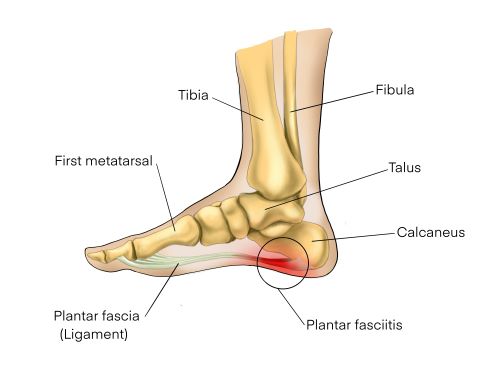
The plantar fascia is a tissue strip that stretches from the level of the fingers to the bone of the heel (calcaneus), connecting them and forming the arch of the foot (the hollow on the internal side of the foot).
When the plantar fascia becomes too tense, it can pull the heel bone causing pain and inflammation.
Thus, walking, running and standing will be accompanied by pain in the heel.
➢ athletes/persons who run
➢ persons who have flat foot or high foot arch
➢ overweight persons
➢ persons who spend a lot of time standing
➢ persons aged between 40 and 60 years
Maintaining body weight within normal limits or losing weight, in the case of overweight people, is essential, because the extra kilos exert even more pressure on the heels and also affect the plantar fascia.
Footwear has an extremely important role in many of the foot diseases, including plantar fasciitis.
Shoes with good plantar support (which do not have too thin soles) are preferred.
Sports shoes must be changed/replaced often, because a blunted or damaged sole, for example, no longer provides the same support for the heels and for the plantar fascia. In the case of women, both high heels and ballerina flats should be avoided as much as possible. Shoes with high heels can cause pain in the heel due to the rigid material of the footwear that permanently presses on the heels. Ballerina flats, on the other hand, do not provide any support for the plantar arch of the foot (the hollow on the internal side of the foot) leading, with time, to plantar fasciitis but also to problems of the knee, hip and even the back.
Walking barefoot is indicated on grass or sand, not on hard surfaces, including sandstone or parquet in the house are hard surfaces, which is why it is recommended to wear slippers.
People who have flat foot or high foot arch (the hollow on the inner side of the foot) can place personalized insoles inside the shoes, adapted to the individual needs. These bands are made after an examination of the foot and after the analysis of the gait.
By using special devices (gait scanners and pressure plates), gait analysis is extremely useful because it provides information on the biomechanics of the foot. Often the problems related to the biomechanics of the foot (flat foot, the tops of the feet oriented inside or outside, the arch of the foot too high, etc.), are predisposing factors or even causes of the plantar fasciitis.
Sports activities such as swimming or cycling will not cause plantar fasciitis. Generally, high-impact movements on the legs, such as jumping or running on hard surfaces, will be avoided. It is important that each sports activity is followed by some stretching exercises that include the calf, the Achilles tendon and the sole.

I always follow professional workflow and provide you the best service with reliable costs.



Hemiplegia is a condition caused by brain damage or spinal marrow injury that leads to paralysis on one side of the ...
One of the most important elements of exercising, recreational or performance, is recovery and it is also one ...
Bursita popliteala care reprezinta inflamarea bursei popliteale, este cauzata de un exces de lichid provenind ...