



2023-04-10 00:00:00
THE DANCER'S BALANCE
The hip syndrome, also called the dancer's hip, is a condition characterized by a 'rupture' sensation thereto ...


Parkinson's disease is a progressive, degenerative disease that affects about 7-10 million people worldwide.
Parkinson's disease is usually considered to be a disease that occurs predominantly among the elderly.
However, about 4% of cases are diagnosed in people under the age of 50 years.
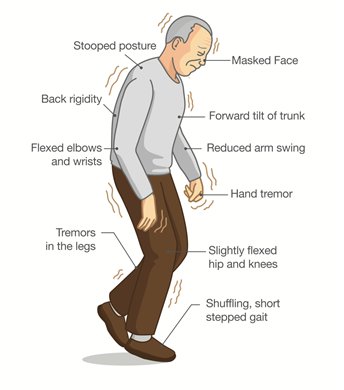
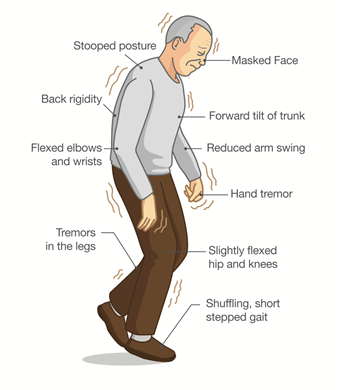
Parkinson's disease is a progressive disorder of the nervous system that affects movement.Symptoms begin gradually, sometimes starting with a barely noticeable tremor, in one hand and vary depending on the progression of the disease and over time.
As Parkinson's disease evolves slowly, initially the symptoms may be very mild or not present, the typical symptoms usually developing between 50 and 60 years of age.
1. Muscle stiffness, accompanied or not by pain, is commonly found in people with Parkinson's. Reduced mobility and swaying of the arm on one side of the body, while walking, as a direct result of muscle rigidity, are the first signs of Parkinson's disease. Stiffness can affect the leg muscles, facial muscles, neck and other parts of the body. Muscles often feel tired and painful.
2. Problems with walking and balance.
Walking will be done with difficulty, usually with small steps, with the legs close together and the body slightly bent forward (from the waist). With the progression of the disease, posture and balance problems also occur.
3. Tremor is usually one of the first symptoms of Parkinson's disease. Trembling often affects the hands, arms or legs. These tremors can occur both during an activity and at rest. At first, the tremor can occur only on one side of the body, later it can also extend to other organs, such as the lips, chin or tongue.
In Parkinson's disease, certain neurons in the brain gradually decompose or die. Many of the symptoms are due to the loss of neurons that produce dopamine, a neurotransmitter (chemical messenger) in the brain. When dopamine levels decrease, abnormal brain activity occurs, which leads to impaired movement and other symptoms of Parkinson's disease.
Although there is no known cause of Parkinson's disease, aging plays a significant role in the onset of the condition. Other factors that are believed to increase the chances of developing this degenerative disease include:
1. genetic predisposition or the presence of the disease in other family members
2. in some cases, exposure to pesticides and other chemicals
Although Pakinson's disease cannot be cured, the symptoms of the disease can be kept under control with the help of increasingly innovative drugs, and physical therapy.
Specific exercise programs help patients to remain active, independent, so that they can carry out their daily activities.
Exercise can improve both movement functions and cognitive functions such as thinking and memory. Also, exercise can have a positive impact on posture, but also on mood and social interactions.
Exercise significantly contributes to:
➢ Increased muscle strength in the upper and lower limbs
➢ Increasing muscle strength in the trunk and improving posture
➢ Increasing joint flexibility
Because the cause of Parkinson's disease is unknown, the ways to prevent the disease are also unclear. Some research has shown that regular aerobic exercise could reduce the risk of Parkinson's disease. Other research has shown that people who consume caffeine – which is found in coffee, tea and cola – are less likely to develop Pakinson's disease. Green tea is also linked to a reduced risk. However, there is neither enough evidence nor known exactly the mechanism by which caffeine protects against the disease.

I always follow professional workflow and provide you the best service with reliable costs.



The hip syndrome, also called the dancer's hip, is a condition characterized by a 'rupture' sensation thereto ...
Shoulder subluxation or subluxation of the glenohumeral joint is defined as a partial or incomplete dislocation that ...
Burnout syndrome or professional burnout syndrome is a state of exhaustion, both physical and mental, which ...