


2023-04-07 00:00:00
THORACIC INTERVERTEBRAL CONTRACTURE
Thoracic intervertebral contracture is also known as the sprain of the articular facet because the intervertebral ...


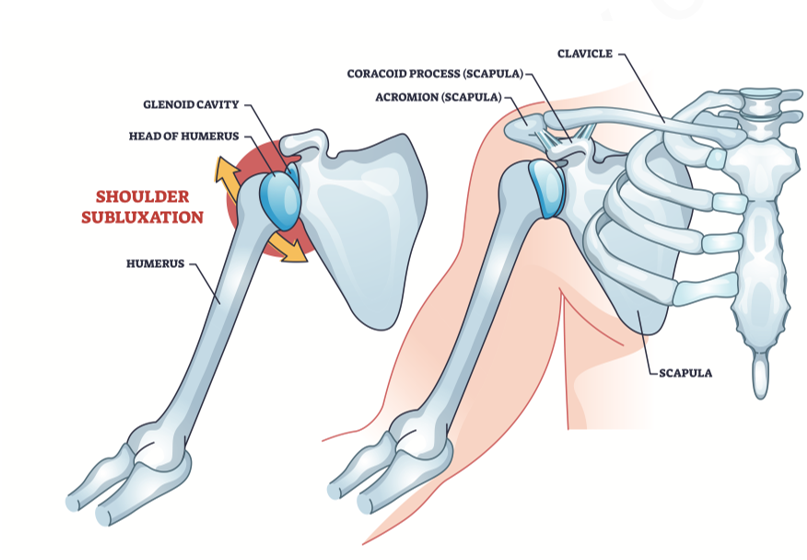
Shoulder subluxation or subluxation of the glenohumeral joint is defined as a partial or incomplete dislocation that usually stems from changes in the mechanical integrity of the joint.
In a subluxation, the humeral head slips out of the glenoid cavity (the head of the humerus bone is normally fixed in the glenoid cavity, hence the name glenohumeral joint), as a result of a blow to the shoulder area or as a result of the weakness of the rotator cuff (the tendinous blade formed by the tendons of four muscles that, by their action, ensure the stability of the shoulder).
The shoulder can suffer sublixation on the anterior (forward), posterior (back) and lower (down) side.
The shoulder joint is the most mobile joint in the body, but also the most frequently dislocated (due to the increased mobility, the stability of the shoulder is affected). The shoulder allows most of the gestures in everyday life, such as: eating, writing, washing etc. Otherwise, maintaining the mobility of the shoulder is very important, as is its stability.
The component bones of the shoulder joint are:
➢ The humerus
➢ The scapula or shoulder blade is a flat, triangular bone located in the posterior part of the shoulder. The upper part of the scapula is formed by the acromion bone.
➢ The clavicle (is a long bone that connects the scapula to the sternum)
Most of the stability of the shoulder is provided by the surrounding skeletal muscles, with the help of associated tendons and various ligaments. The rotator cuff, composed of the tendons of 4 muscles (supraspinatus, infraspinatus, small round muscle, subscapular muscle) maintains, by the action of these muscles, the humeral head in the shoulder joint and ensures the movement of the arm in different directions.
➢ instability of the shoulder joint
➢ a fall on the outstretched arm
➢ a direct blow on the shoulder
➢ forcing the arm into a position that is not normal
➢ injuries during winter sports (snowboarding, skiing) and contact sports (rugby and football)
➢ stroke, which often causes muscle weakness, which can lead to destabilization of the shoulder joint, followed by a subluxation.
After a subluxation of the shoulder, the ligaments remain weakened and the risk of relapses is very high.
The shoulder will be given the necessary time to recover, avoiding activities or movements that cause pain. Once the pain has appeared, the shoulder will be used with caution. A splint or orthosis, worn for a while, protects the shoulder from certain movements.
The duration of wearing the splint or orthosis depends on the extent of the subluxation.
It involves easy handling of the humeral head back into its position in the glenoid cavity. After this maneuver, severe pain should improve.
Ice applied topically, in sessions of 5-10 minutes 3-5 times a day, significantly helps reduce inflammation. Always wrap the ice in a thin towel so as not to irritate the skin.
Nonsteroidal anti-inflammatory drugs are useful in relieving pain and inflammation, but are recommended for periods of time that do not exceed 7-14 days maximum.
It represents the key element of the treatment of shoulder subluxation, aiming at:
➢ increasing the stability of the shoulder, through toning exercises (strengthening) for the stabilizing muscles of the shoulder. These exercises will be continued, on a regular basis and after the recovery of the subluxation, in order to prevent the occurrence of relapses and or other injuries.
➢ increasing shoulder mobility and resuming complete movements through stretching exercises
Manual therapy and physiotherapy are also part of the recovery protocol of shoulder subluxation.
This may be recommended when there are repeated relapses or when the nerves, blood vessels or ligaments in the shoulder have been damaged.
➢ There is no return to a full range of routine or sports activities until they can be done without pain and without the movement being restricted. Early resumption of activities predisposes the shoulder joint to a new subluxation
➢ The recovery time varies from person to person depending on health, age and previous injuries

I always follow professional workflow and provide you the best service with reliable costs.



Thoracic intervertebral contracture is also known as the sprain of the articular facet because the intervertebral ...
Plantar fasciitis, which represents inflammation of the plantar fascia, is one of the most common causes of pain in the heel, especially in the morning ...
The tibia is the most commonly fractured bone in the whole body and is one of the long bones of the body along with the ...