


2023-03-28 00:00:00
CAN WE PREVENT A HERNIATED DISC?
The term "herniated disc" has become quite popular when we are talking about spinal disorders. It is important to ...


The glenohumeral internal rotation deficit is simply a loss of the internal rotational movement of the shoulder. Basically, when you cannot take the hand to the back to close the bra or to shove a shirt in the pants at the back, there is already a restriction in the internal rotation of the shoulder.
The glenohumeral internal rotation deficit is diagnosed when there is a loss of 20° of internal rotation in the affected shoulder joint compared to the healthy shoulder.
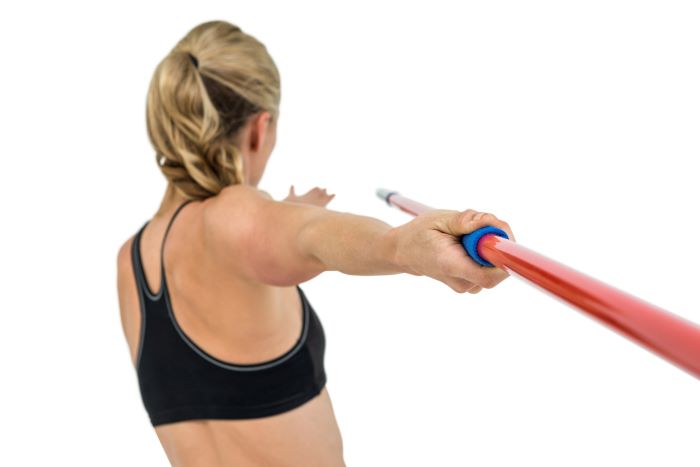
This condition is frequently found in athletes who performs throws, as is the case in baseball or athletics (hammer throwing, spear or discus throwing), in tennis but also in other people who perform throwing movements.
As clinical manifestations, pain in the shoulder, decreased muscle strength and implicitly decreased throwing performance occur most frequently. Because the pain is not very intense it is often overlooked by the athlete, which leads to the progression of the condition.
The shoulder represents the junction of the trunk with the upper limbs. It is very flexible, ensuring high amplitude movements of the arms orienting them in all directions (it is the most mobile joint in the body), but it has low stability.
The shoulder of the thrower must be mobile enough to allow excessive external rotation but must also be stable enough to prevent symptomatic subluxations of the humeral head. More precisely, a balance between stability and mobility is required. When this balance is compromised, injuries/injuries occur.
The loss of the internal rotation often results from a thickening of the joint capsule, which occurs from the repeated micro-trauma that is transmitted in the deceleration phase of the throwing movement. Whenever the joint capsule thickens (tightens), the shoulder loses the amplitude of the internal rotational movement. The movement becomes problematic, however, in the affected shoulder when the loss of internal rotation is greater than the external rotation.
Avoiding the throwing movement is recommended for about 6 months, during which you can start the recovery program through physical therapy.
The recovery program is based on stretching exercises that aim at progressively stretching the different parts of the posterior joint capsule.
Since stretching exercises are incorporated into their daily routine, athletes tend to gain about 10° of internal rotation from the first week of recovery.
Also, shoulder stretching exercises will be performed passively by a physical therapist, which leads to an increase in the amplitude of the internal rotation movement.
It is necessary in the case of people who do not respond well to the stretching exercises (approximately 10%) and consists of the posterior capsular release, which subsequently allows the increase of the amplitude of movement.
➢ When shoulder pain occurs, a specialist should be consulted because the not treated deficit of internal glenohumeral rotation in time can lead to the development of other injuries to the shoulder.
➢ The resumption of sports activity after regaining the internal rotation movement of the shoulder will be done gradually.

I always follow professional workflow and provide you the best service with reliable costs.



The term "herniated disc" has become quite popular when we are talking about spinal disorders. It is important to ...
The stroke occurs when the blood supply to a part of the brain is severely reduced or interrupted, which leads to depriving the ...
Rib injuries generally refer to rib fractures, which represent the rupture of one or more ribs. Sometimes the ribs are ...