

2023-03-06 00:00:00
WHAT DO WE DO IN CASE OF MUSCLE CRAMPS?
Muscle cramps are sudden and involuntary contractions of one or more muscles that can cause severe pain ...


Hip fracture is a rather serious injury, especially for the elderly, both due to the fracture itself and due to associated complications. A higher risk of hip fracture is presented for people over 65 years of age, increasing significantly after the age of 80. This happens due to the fact that the bones become weaker and the balance more precarious as they get older. And in this situation, as in the case of other injuries, prevention is important, by maintaining a good bone density.
In children, hip fracture occurs very rarely, due to the superelasticity and composition of bone structure.
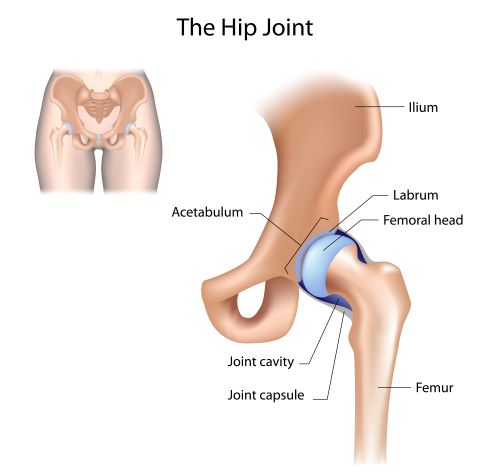
The hip joint is the largest joint in the body and consists of:
➢ The spherical head of the femoral bone, which represents practically about 2/3 of the joint
➢ The acetabular or glenoid cavity, in which the femoral head is fixed
Practically, the hip joint connects the femur (thigh bone) to the pelvis.
The surrounding ligaments and joint capsule keep the hip joint safe.
The most important muscles that surround the hip joint are the thigh muscles (anterior: quadriceps, posterior: femoral biceps, semi-membranous and semitendinosus and inside: the adductors) and buttock muscles.
The hip joint allows a wide range of movements, flexion being the most important (raising the knee to the chest).
➢ severe pain in the hip area
➢ impossibility of maintaining one’s own weight on the affected leg
➢ orientation outside/shortening of the leg with the fractured hip
➢ rigid hip and hematomas (bruises) at its level
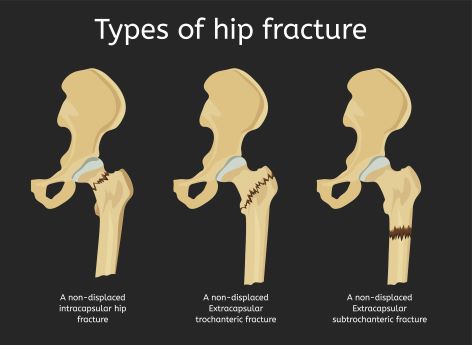
The most common are the fractures of the femoral gap and trochanteric fractures. In rarer cases, due to repeated and excessive movements, specific to certain sports or physical activities that overstrain the hip beyond measure, stress fractures may also occur.
The treatment for the hip fracture is established according to several factors, such as: age, general health, the degree of tolerance to medicines and any associated diseases.
The treatment consists of:
➢ repositioning of bones
➢ immobilization of the area
➢ drug treatment.
The rest period should be as short as possible in order to avoid possible complications. Thus, rapid mobilization will be pursued, within the limits of pain, as soon as walking with support is possible.
If surgery is required, the orthopedic doctor will choose the type of surgery and, as the case may be, the insertion of rods, screws or partial or total replacement with hip prosthesis. The recovery of hip mobility is a long process, physical activity and therapy being extremely important.
This:
➢ On the first day after surgery, the easy mobilization of the joint begins.
➢ Physical therapy aims to increase the mobility and stability of the hip, thus preventing the rigidity that can be installed in the absence of movement.
➢ The physical therapy program includes:
1. warm-up exercises
2. stretching exercises
3. toning (strengthening) the muscles around the hip joint
Do not ignore the pain occurred during the physical therapy program, normally it should not be present but if it appears it should be discussed with the physical therapist.
➢ Exercises performed regularly helps strengthen bones and improve balance
➢ Evaluation of the home is important to be able to remove any obstacle/danger of falling
➢ Elderly persons must always have with them a phone/ringbell/bracelet or other accessory that helps them announce if they have fallen
➢ Balanced nutrition with products rich in vitamin D and calcium helps strengthen bones
➢ Evaluation of the side effects (osteoporosis) of drugs taken in the term by people with chronic conditions, it is important.

I always follow professional workflow and provide you the best service with reliable costs.



Muscle cramps are sudden and involuntary contractions of one or more muscles that can cause severe pain ...
Muscular dystrophy is part of a group of genetic disorders that cause the progressive degeneration of muscle fibers ...
Morton’s neuroma is a painful condition that affects the flat part of the foot, at the level of the metatarsus, usually ...