


2023-03-27 00:00:00
THE IMPORTANCE OF KEGEL EXERCISES
Kegel exercises strengthen the pelvic floor muscles providing better support to the pelvic internal organs superior ...


Since the kneecap serves as a shield for the knee joint, it is quite at risk of injury. Direct fall on the knee, is one of the most common causes of fracture of the kneecap.
Fracture of the kneecap can be quite debilitating, often requiring surgery for proper healing. In the long run, however, it can favor the development of arthritis in the affected knee.
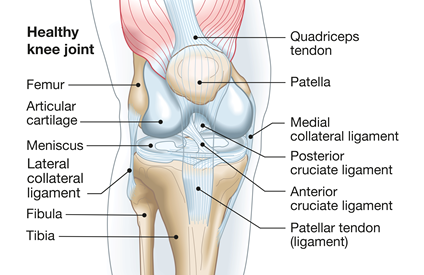
The kneecap or patella is a short, round, flattened antero-posterior bone, which is part of the knee skeleton. It is located at the lower extremity of the femur and is developed in the thickness of the tendon of the quadriceps muscle. The role of the kneecap is to protect the knee. The articular cartilage covers the underside of the kneecap and femur and helps them to slide smoothly along each other when the leg moves.
Although the kneecap is not necessary when walking or bending the foot, it absorbs much of the pressure between the upper and lower parts of the foot. Climbing stairs and squatting can put additional pressure on both the kneecap and the knee joint.
The kneecap may fracture partially or completely. In some cases, the fracture of the kneecap is also accompanied by the stretching or rupture of the ligaments or tendons that attach to the kneecap.
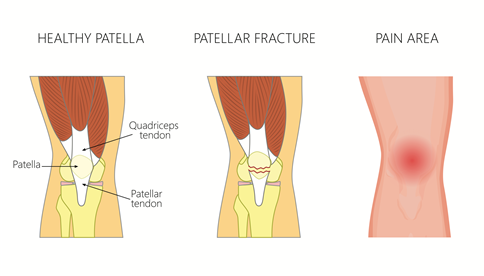
If the broken bone fragments have not been displaced from the force of the injury, there is no need for surgery. Plaster splints or even immobilization of the foot in plaster are used to keep the knee straight. Thus, the broken bone ends will stay in the correct position during the healing process, a process that can take up to 6-8 weeks. During all this time, the affected leg does not have to bear the body weight, which is why walking will be done with the help of crutches.
If the ruptured bone fragments have moved, surgery is the treatment option.
After surgery, recovery through physical therapy is important to improve the range of motion of the knee.
Postoperative stiffness is quite common and can hinder the recovery process of the affected knee, in the absence of movement.
The recovery program will include specific exercises, initially from unloading positions (positions where the knee is not subjected to orthostatic pressure) and will continue with active exercises, toning the stabilizing muscles of the knee joint.
Avoid exercises that involve repetitive knee bends or squats until the kneecap is completely healed.
Most patients will be able to return to their normal activities within 3 to 6 months.
✓ Some lifestyle changes may be necessary to help protect the knee and prevent other possible injuries
✓ Avoid climbing stairs if you are tense (the muscles of the lower limbs are not relaxed)
✓ Maintaining healthy and flexible joints is important because fractures of the kneecap can also affect the articular cartilage, which can lead to arthrosis over time.

I always follow professional workflow and provide you the best service with reliable costs.



Kegel exercises strengthen the pelvic floor muscles providing better support to the pelvic internal organs superior ...
Radius is one of the two bones of the forearm and stretches from the elbow to the wrist. The distal part of it, at the ...
The fracture of the peroneum also called fibula, the second bone of the tibia located in the external part of the calf ...