

2023-03-23 00:00:00
OBESITY
Obesity is not only an aesthetic concern, it is a medical problem, which increases the risk of other diseases and health ...


Kegel exercises strengthen the pelvic floor muscles providing better support to the pelvic internal organs superior to these muscles. More precisely, the pelvic floor muscles support the urethra (tube that connects the bladder with the outside to remove urine from the body), the bladder, the uterus and the rectum (the terminal portion of the large intestine, where the temporary storage of the fecal bowl takes place, before being discharged from the body through the anus). So, improving the contraction force of these muscles can help both women and men.
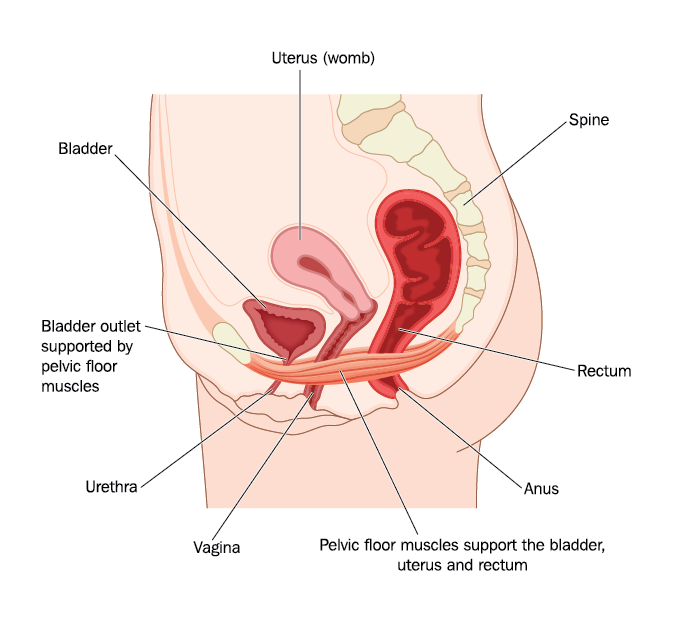
These exercises get their name from Arnold Kegel, a gynecologist who discovered and recommended them since the 1940s to women with birth-induced urinary incontinence.
To locate the pelvic floor muscles, we imagine that we are trying to stop the flow of urine. Once located, Kegel exercises are performed.
The way the Kegel exercises are performed is important for achieving the desired effect.
Also, if the exercises are performed correctly, possible undesirable effects on the pelvic organs are prevented.
Kegel exercises generally consist of following three steps:
1. Straining (contraction) of the pelvic floor muscles
2. Maintaining contraction
3. Relaxation of muscles
Initially, the contraction of the pelvic floor muscles is maintained for five seconds followed by their relaxation for five seconds. If it’s too difficult, start with straining and maintaining the contraction of these muscles for two seconds followed by relaxation for three seconds.
It is important that the contraction of the pelvic floor muscles is carried out without straining the abdomen, tightening the buttocks or shortness of breath; in other words, only the pelvic floor muscles have to work.
The technique of executing Kegel exercises will improve gradually, from initial short repetitive movements, not numerous, so that in time a contraction of ten seconds is maintained, followed by relaxation for ten seconds.
Introducing Kegel exercises into your daily routine (at least three sets of ten repetition) is essential. You can do one series in the morning, upon waking up, another during some relaxing activities (watching a movie) and finally, a series before bedtime.
Strengthening the pelvic floor muscles will help prevent or stop effort urinary incontinence, a problem that affects a large percentage of women during pregnancy or after childbirth. In addition, Kegel exercises can also help reduce the risk of rectal incontinence.
Also, because they improve circulation the vaginal and rectal areas, Kegel exercises prevent the appearance of hemorrhoids and, in addition, speed up healing after episiotomy (surgery that involves a small incision in the area of the perineum, the area between the vagina and the anus, made to ease natural childbirth) or the rupture of the perineum during natural childbirth.
In addition, continuing regular practice of Kegel exercises after childbirth (natural or by cesarean section) helps maintain control over the bladder, improve the tone of the vagina, which will make sexual activity much more pleasant.
The benefits of Kegel exercises can be enjoyed by men helping to improve their sexual life but also decrease the risk of both urinary and rectal incontinence.
In men, the technique is a little different, but not very far from the one applied in women. More precisely, they are trying to strain these muscles without involving the buttocks or abdominal muscles.
As in the case of women, daily practice (gradually reaching three sets of ten repetitions) is the key to obtaining the desired effect as quickly as possible and maintaining the results, once they appeared.
In conclusion, Kegel exercises are an extremely useful practice in preventing urinary and rectal incontinences, by improving the contraction force of the pelvic muscles. Both women and men can benefit from the results of these exercises by introducing them into a daily routine.

I always follow professional workflow and provide you the best service with reliable costs.



Obesity is not only an aesthetic concern, it is a medical problem, which increases the risk of other diseases and health ...
Massage has been practiced for decades, both for therapeutic and relaxation purposes, there are currently many ...
It burns calories, which helps maintain body weight and even lose extra kilograms ...