

2023-04-10 00:00:00
FRACTURES OF THE FINGERS
Fractures of the hand can occur either at the level of the small bones of the fingers (phalanges) ...


Lombago is a condition that manifests with pain in the muscles and joints of the lower back, more precisely in the lumbar area. At some point, 80% of adults suffered from a localized pain in the lumbar level.
The causes can vary, some known, others unknown, but poor posture is one of the most common causes
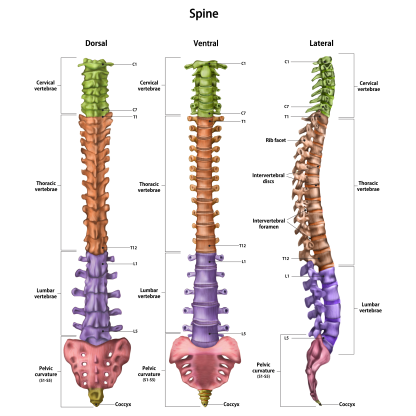
The lumbar spine consists of 5 powerful vertebrae that provide support for approximately the entire body weight. Between the vertebrae there are the intervertebral discs, structures of fibrocartilaginous nature which are essential for the movement of the spine. They act as a ligament, tying one vertebra to the next, but especially they have a role in the absorption of shocks, significantly diminishing the impact between the vertebrae.
The lumbar intervertebral discs are most in demand, because the greatest pressure acts on them.
Ligaments, nerves and muscles are additional components of the spine. All these structures work together ensure the strength and flexibility of the lumbar spine.
The spine works well in certain positions/postures, according to its 4 physiological curvatures, namely: cervical, thoracic, lumbar and sacral. These curvatures increase the strength and elasticity of the spine maintaining the normal position of the body.
A wrong posture, maintained for a longer period of time, leads to muscle fatigue and eventually becomes uncomfortable and painful.
A correct posture of the back is one in which the upper part of the case is leaned against a support and the lower back is slightly arched.
Because the lower back area is essential for all movements in the body, the pain in this area can be felt more intensely than in other areas.
The natural healing time of an episode of lombago can be up to 4-6 weeks.
The key element of the treatment is exercise.
Just as important as exercise are the correct positions/postures used to sit, work and sleep, allowing the back to recover.
In the acute phase (when the pain is intense) anti-inflammatory and analgesic drugs will be taken, useful for reducing pain but also for preventing of abnormal positions, which will subsequently hinder the recovery process.
When the pain subsides, the exercise program is started, under the guidance of a physical therapist. The intensity of the exercises and the degree of loading will gradually increase, following:
➢ reducing stiffness
➢ increasing mobility and muscle flexibility
➢ toning the lumbar paravertebral muscles (a toned muscle supports the lumbar spine but also helps prevent relapses and/or other injuries)
Besides the exercise program, it is important to introduce sport in the daily routine, such as swimming, cycling, running etc.
➢ To prevent an episode of lombago, insist on correcting the posture throughout the day. People who spend a lot of time at the office should use a lumbar holder for the chair.
➢ Avoid sedentary lifestyle, daily exercise helps reduce pressure and pain in the lumbar.
➢ The advice of a physical therapist will be observed and an exercise program will be practiced to strengthen the lumbar area, as the lumbar area provides support for approximately the entire body weight
➢ Maintain body weight within normal limits.

I always follow professional workflow and provide you the best service with reliable costs.



Fractures of the hand can occur either at the level of the small bones of the fingers (phalanges) ...
The scapula or shoulder blade is a thin and flat, mobile, triangular bone, well protected by a surrounding ...
Medial epicondylitis or the golf player's elbow is a condition that causes pain in the tendons of the forearm muscles that ...