


2023-02-07 00:00:00
THE SLIPPAGE OF THE FEMORAL EPIPHYSIS
The slippage of the femoral epiphysis is a disorder that affects the adolescent's hip. Fortunately it is quite rare and ...


Facial paralysis or facial nerve paralysis means the loss of the ability to move the facial muscles, as a side effect of a condition and there are two types: peripheral facial paralysis and central facial paralysis.
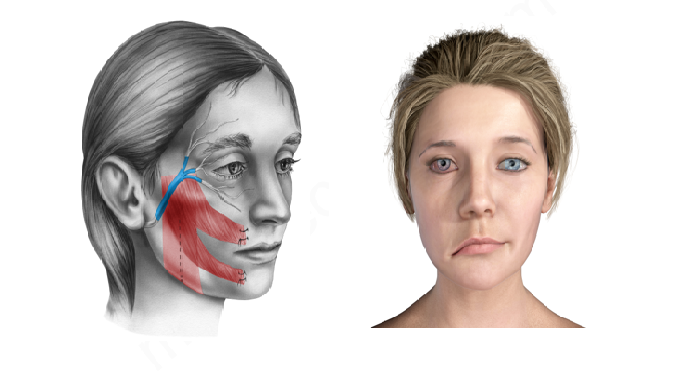
Also called Bell's palsy, peripheral facial paralysis is manifested by the weakness of the facial muscles unilaterally (only one side of the face), practically half of the face seems to fall out.
On the affected side the eye does not close and the corner of the mouth is lowered.
But there are other manifestations such as:
➢ difficulty in chewing
➢ taste disturbances
➢ behind the ear pain accompanied by hyperacusis (hearing intensification)
➢ changes in the lacrimal secretion.
Peripheral facial paralysis can occur at any age, as a result of inflammation of the facial nerve that innervates the part of the affected face. The facial nerve is the seventh pair of cranial nerves and is responsible for the movements of the mimic muscles (facial expression), the innervation of the lacrimal and salivary glands and the sending of sensory information related to taste.
Inflammation of the facial nerve can be caused by a number of conditions:
➢ viral conditions, with herpes virus being the most common
➢ tumors
➢ trauma
➢ diabetes
Most of the time peripheral facial paralysis is a temporary condition, the symptoms improving after a few weeks and the complete recovery can take up to 6 months.
There are very few people in whom symptoms can persist all their lives and in rare situations facial paralysis can reappear.
It manifests only at the level of the lower part of the face, also unilaterally, the forehead and eye not being affected.
However, it is associated with impairment (weakness or paralysis) of the upper limb on the same side and language disorders.
In central facial paralysis, the symptomatology is more intense and the causes that cause it are much more serious. Among these we mention the ischemic stroke, a situation in which the patient must be urgently transported to the hospital.
The prognosis of facial paralysis is dependent on its cause, so the first step is to present it to the neurologist to identify the cause and initiate a treatment as close as possible to the moment of onset.
The healing time is dependent on the speed with which a treatment adapted to the cause is initiated, as well as an individualized recovery program.
The therapeutic approach involves treating the cause of the paralysis of the facial nerve and consists of massage, medical gymnastics and physiotherapy.
An important role in recovery holds the massage and facial gymnastics, performed under the guidance of a physical therapist, in order to re-educate the mimic of the face and restore the nerve synapses (the commands that the brain sends to the facial muscles).
A series of mimicry and diction exercises will also be performed to help maintain and increase the progress of muscle tone recovery.
The use of chewing gum plays an important role in training the facial muscles.
Certain physiotherapy procedures are indicated to regain muscle tone.

I always follow professional workflow and provide you the best service with reliable costs.



The slippage of the femoral epiphysis is a disorder that affects the adolescent's hip. Fortunately it is quite rare and ...
The bursae are located throughout the body, between the soft tissues and bones, being small sacs with liquid with ...
The fracture of the peroneum also called fibula, the second bone of the tibia located in the external part of the calf ...