


2023-03-17 00:00:00
LORDOSIS
Lordosis is defined as an abnormal curvature of the spine, but the term lordosis is also used to define two of the ...


Athletic pubalgia, known as Gilmore's groin, after the surgeon who identified it, is a condition in which the tendons of the muscles and ligaments in the groin region are affected.
The condition is more common in men than in women and usually occurs in sports that involve rapid movements, with twists and turns, such as football, rugby and ice hockey.
Also called a sports hernia, athletic pubalgia affects only the lower abdominal wall and must be differentiated from the inguinal hernia in the sense that it does not involve a clinically detectable hernia.
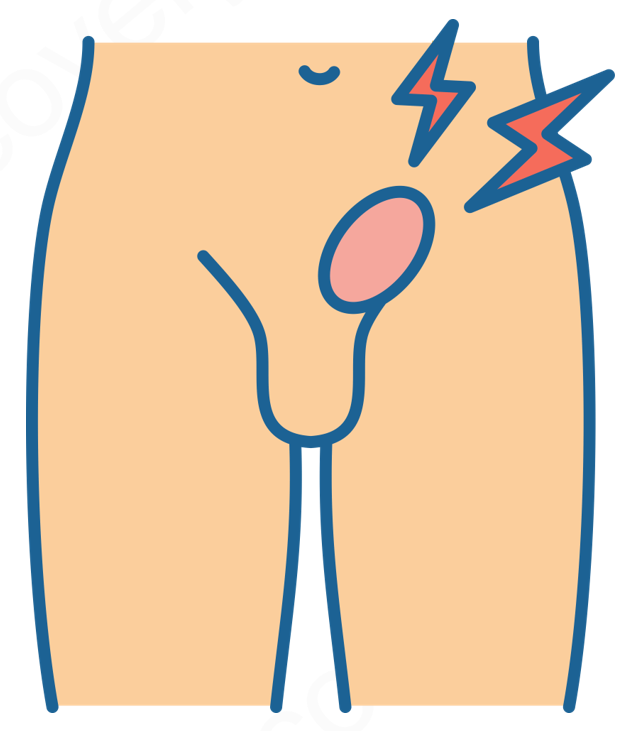
In men, sometimes chronic pelvic pain specific to pubalgia is often misdiagnosed as chronic bacterial prostatitis and unnecessarily treated with antibiotics.
Several anatomical structures are involved in athletic pubalgia. More precisely, there may be lesions in the lower abdomen or lesions in the pelvic area. But regardless of the location of the lesion, athletic pubalgia manifests with weakness and dilation of the deep inguinal ring, which is the entrance to the inguinal canal (the inguinal canals are the two passages in the anterior abdominal wall and are larger and more prominent in men).
The inguinal canal is a structure that crosses the abdominal wall giving the name of the region in which it is located. It allows the passage of the spermatic cord in men and the round ligament of the uterus in women.
The inguinal canal has two orifices: one with a superficial output called the subcutaneous inguinal ring and one with a deep inlet called the deep inguinal or abdominal ring.
In the structure of the inguinal canal, four walls are identified:
➢ The anterior wall is formed of the aponeurosis of the external oblique abdominal muscle
➢ The posterior wall consists of the transverse fascia, which has three strengthening ligaments designed to give it greater strength
➢ The upper wall is formed of the lower edge of the internal oblique abdominal muscle and the transverse abdominal muscle
➢ The lower wall is rendered by the upper side of the medial half of the ligament inguinal of Poupart or Fallopian
Athletes may experience unilateral inguinal pain, pain exacerbated by exercise.
In chronic cases, athletes may also experience pain in their daily activities, not only during physical activity.
Sudden movements, repeated twisting, high strength during a professional sports activity, as well as increased intra-abdominal pressure can lead to damage to the lower wall of the abdomen.
Sometimes pain in athletic pubalgia can occur as a result of the difference between the adductor (internal) muscles of the thigh, strongly toned compared to the lower abdominal muscles, poorly toned.
Initially, you will opt for rest followed by the slow resumption of physical activity. Avoid sudden movements of turning and twisting that can cause or accentuate the pain.
Anti-inflammatory drugs (ibuprofen, aspirin, diclofenac etc.) and locally applied ice, 3-4 times a day for 20-30 min, help reduce pain and inflammation. To protect the skin, the ice will be wrapped in a thin towel before application. The drug treatment can be administered for a short period of time, 7-14 days maximum.
Physical exercises will be performed to stabilize and tone (strengthen) the muscles in the pelvic region.
Strength exercises can be done on a mattress using resistance bands (to avoid lifting weights).
In order to continue doing sports activity under good conditions, you can choose to wear compression shorts during exercise. Exercises to strengthen the CORE area (abdomen, pelvic muscles, lower back and buttocks) are extremely useful. THE CORE AREA represents the "foundation" of each movement allowing mobility in the upper and lower part of the body, efficiently directing the power to the limbs, while stabilizing the spine, the chest and the pelvis against the stress caused by the external movements or forces acting on them
If the conservative treatment does not achieve the expected results, you can opt for surgery. The resumption of normal walking is encouraged immediately after surgery and in 10-14 days you can resume running in a straight line (without twists and turns).
➢ improving muscle strength and stability helps counteract the high forces applied in the lower abdomen and pelvis.
➢ activities that cause pain should be interrupted.

I always follow professional workflow and provide you the best service with reliable costs.



Lordosis is defined as an abnormal curvature of the spine, but the term lordosis is also used to define two of the ...
The fracture of the peroneum also called fibula, the second bone of the tibia located in the external part of the calf ...
The brachial biceps muscle is a long, strong muscle, located on the anterior side of the arm. It is inserted on the ...