

2023-03-03 00:00:00
SHOULDER ARTHROSCOPY
Arthroscopy is the procedure that orthopaedic surgeons use to inspect, diagnose and repair problems inside a joint ...


Torticollis is a painful condition of the neck muscles (sternocleidomastoid muscle) in which the head and neck are tilted laterally, towards the shoulder, and the chin is twisted towards the opposite shoulder.

Torticollis can affect both children and adults.
Depending on the time of the onset, there are 2 forms of torticollis:

1.Congenital torticollis – present at birth. It is the most common type of torticollis. But although the baby has it from birth, parents can only notice it when the baby is a few weeks old, as it begins to have more control over the movement of the head. Congenital forms of torticollis can also be associated with other diseases of the musculoskeletal system, such as diseases of the scapular belt (high shoulder blade) or of the lower limbs (dislocations, congenital crooked leg) and there may also be facial asymmetry.
2.Acquired torticollis – occurs after birth, in the first 4-6 months of life or later in childhood. It can start quickly, or it can install slowly. Unlike congenital torticollis, in the case of acquired torticollis there is usually no facial asymmetry. The acquired torticollis may be benign (not severe) or may be the sign of a more severe health problem. The causes are different, which is why it is very important to act quickly so that your child receives the proper care and treatment.
The adult who suffers from torticollis sleeps badly, with his neck twisted during the night and upon awakening the neck is blocked and tilted to one side.
The pain is acute and accompanied by muscle spasm and inflammation and movement is limited.
In adults, there are two types of torticollis:
1. Spasmodic torticollis, a painful condition in which the muscles contract involuntarily causing the head to twist or turn to one side.
2. Symptomatic torticollis, which can occur in some diseases of the cervical spine.
For congenital torticollis, stretching (straightening) the neck muscles is extremely effective, especially if it begins in the first weeks after birth. If stretching and other forms of treatment are not effective in the case of congenital torticollis, surgery may be required to correct muscle deficiency.
Locally applied heat, in sessions of 10 minutes, repeated 3-5 times a day, helps relax the contracted muscles and allows more extensive movements.
Pain relievers and muscle relaxants help to decrease pain and relax the muscles, especially necessary before the start of the exercise program.
Certain specific exercises will be performed that aim at:
➢ increasing the amplitude of neck movement
➢ correcting the deficient position
➢ realigning the neck muscles in the normal position
It helps correct serious forms of torticollis.
In children, gentle techniques are used to relax the muscle spasm, while in adults, manipulations are used to correct the position.
➢ Congenital torticollis and severe forms of torticollis can cause long-term complications, which is why it is necessary to consult a doctor or physical therapist for an evaluation.
➢ The torticollis that appears as a symptom of a condition is usually temporary but still requires a medical evaluation.
➢ In the acute phase of the torticollis, driving the car and walking in a straight line and daily tasks are done with difficulty and require more effort.

I always follow professional workflow and provide you the best service with reliable costs.



Arthroscopy is the procedure that orthopaedic surgeons use to inspect, diagnose and repair problems inside a joint ...
Rickets is a condition characteristic to first childhood and consists of insufficient calcification of bone tissue ...
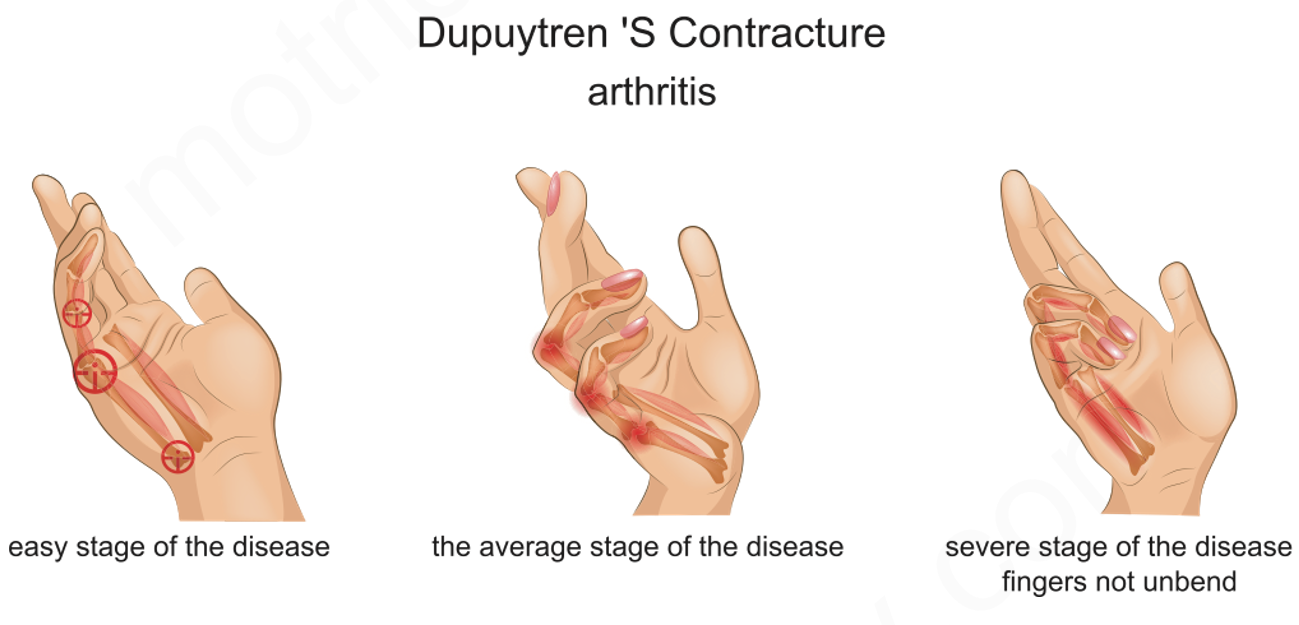
Dupuytren’s contracture occurs when the layer of fibrous tissue in the palm and fingers thickens. Even if it is painless ...