


2023-03-13 00:00:00
BALANCE
Balance is a term frequently used by healthcare professionals, as there is no universally accepted definition of human ...


Whiplash is a neck injury due to the forced, fast, forward-backward movement of the neck.
Whiplash is usually caused by car accidents, with a rear impact, but also by sports accidents or other injuries, such as a fall.
As a result of these injuries, lesions may occur in the vertebrae, intervertebral discs, ligaments, muscles, nerves as well as in other tissues in the neck area.
Most of the time, the condition is completely resolved by following a treatment plan that includes pain relievers (for pain) and anti-inflammatory drugs, as well as physical exercise.
But there are also people who have chronic neck pain and other long-term complications.
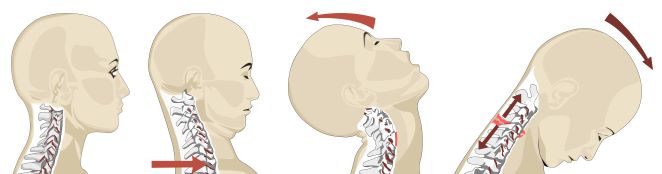
Full recovery is important in order to be able to perform normal daily tasks, aiming at:
➢ relieving pain
➢ restoring the normal range of movement in the neck
➢ preventing stiffness
Thus, it is recommended to follow a treatment plan that includes:
It is necessary for a few days after the injury.
Too much rest can nonetheless delay the recovery process.
Soft, foam cervical collars that limit movement can help reduce pain shortly after injury.
Although they were frequently used in the past, studies have shown that keeping the neck motionless for long periods of time can decrease muscle strength and interfere with recovery.
Current recommendations for using a collar vary, with some experts suggesting use limited to no more than 72 hours, while others say it can be worn up to three hours a day for several weeks.
Heat, applied locally, in sessions of 15-20 minutes, 3-5 times a day, is useful for muscle relaxation, especially when there is associated stiffness as well as muscle contractions. Cryotherapy (ice) applied to the neck for 15 -20 minutes every three hours, helps relieve pain and inflammation. Always put a thin towel between the heat/ice and the area on which it is applied, so as not to irritate the skin.
They help reduce pain and inflammation, but are recommended for short periods of time, 7-10 days. Myorelaxant drugs can also be taken in the short term to relax the contracted muscles.
If the pain is very intense and does not allow the start of the exercise program, an injection of lidocaine (a numb drug), administered in the painful muscle areas, can be useful to reduce pain.
Stretching exercises as well as exercises to tone the affected muscles are important for:
➢ restoring the range of movement in the neck/returning to normal activities
➢ improving posture
➢ pain relieving
Applying heat to the painful area or taking a warm shower before the exercise program can help to better carry out the exercise program.
The physical therapist can also create a routine of personalized exercises that can be practiced at home.
In some cases, a physiotherapy procedure called TENS (transcutaneous electrical nerve stimulation) may be used. TENS applies a light electrical current to the skin. Research, still limited, suggests that this treatment can temporarily ease neck pain and improve muscle strength.
If the symptoms persist for more than 4 weeks, manipulation of the spine can be considered, useful for restoring the musculoskeletal balance and improving mobility, with significant results.
➢ REDUCE STRESS
➢ If the pain in the neck has become chronic, movements or other factors that contribute to the accentuation of pain must be identified, such as stress that is often associated with pain in the neck.
➢ Return to your normal daily routine as soon as possible. This has proven to be beneficial in accelerating recovery.

I always follow professional workflow and provide you the best service with reliable costs.



Balance is a term frequently used by healthcare professionals, as there is no universally accepted definition of human ...
The knee is one of the largest and most complex joints of the body, having a complex functionality. The knee ...
The vertebral spine has 4 physiological curvatures: cervical lordosis, thoracic kyphosis, lumbar lordosis and ...