

2023-03-14 00:00:00
FRACTURE OF THE ELBOW (OLECRANON)
When we bend the elbow, it is quite easy to feel/touch the olecranon. It’s a bone protrusion located at the tip of the ...


The spine has 4 physiological curvatures: cervical, thoracic, lumbar and sacral. These curvatures increase the strength and elasticity of the spine, maintaining the normal position of the body. While the cervical and lumbar spine present an inner curable, known as lordosis, the thoracic spine is curved forward, known as the kyphotic curvature.

The normal thoracic spine extends from the first thoracic vertebra to the 12th thoracic vertebra and must have a slight kyphotic angle, which varies from 20 to 40 degrees. When the "roundness" of the thoracic spine increases over 40 degrees it is called kyphosis.
Kyphosis, popularly called humpback, is a deformation of the spine in the sagittal plane, by its anterior-posterior curvature (concavity - anterior and convexity - posterior), located in the thoracic region.
It is the most common type of kyphosis. It can affect both children, young people and the elderly, generally due to poor posture, with the upper back inclined forward. Postural kyphosis recovers easily by correcting musculoskeletal imbalances.
It is significantly the most unaesthetic form and can cause varying degrees of pain. Scheuermann's kyphosis is considered a form of juvenile osteochondrosis (the disease that affects the intervertebral discs and cartilage). It is found especially in adolescents and presents a significantly more serious deformity than postural kyphosis. A patient suffering from Scheuermann's kyphosis cannot consciously correct posture.
It occurs in infants whose spine has not developed correctly in intrauterine life. The vertebrae can be malformed or merged together and can cause progressive kyphosis while the child develops. A congenital kyphosis can occur suddenly in adolescence, more frequently in children with cerebral palsy and/or other neurological disorders.
It can result from nutritional deficiencies , especially during childhood, such as vitamin D deficiency, which causes rickets and softens the bones. As a result, the curvature of the spine and the curvature of the lower limbs under own body weight are installed.
May occur as a result of untreated or ineffectively treated vertebral fractures.
While most cases of kyphosis are mild and require only monitoring and medical gymnastics, serious cases can be debilitating. High degrees of kyphosis can cause severe pain and discomfort, shortness of breath and digestion, cardiovascular and neurological problems. These types of accentuated curvatures almost always require surgery that can restore the natural degree of curvature of the spine.
The treatment of kyphosis is complex and depends on the patient's age and the degree of deformation.
✓ Thoracic kyphosis up to 50 degrees is treated by physical therapy
✓ Thoracic kyphosis up to 70-80 degrees is treated by physical therapy and helpful orthopedic means (orthopedic corsets)
✓ Severe kyphosis, higher than 80 degrees, can be corrected and stabilized by surgery.

It is the essential element of correcting the kyphotic curvatures, up to 80 degrees, the movement indicated in the recovery of kyphosis being the extension and the contraindicated movement - flexion.
Exercises to correct kyphosis pursue:
✓ Toning the paravertebral muscles
✓ Realigning the spine
✓ Learning a correct posture
✓ Increasing the mobility of the thoracic spine
✓ Treating muscle contractions, if they exist
✓ Reduction of pain
✓ Improvement of breathing
1. Maintain a correct posture at the desk, with your back straight. Every 20-30 minutes there is a short break in which exercises are done to extend the upper back
2. Constantly practice a sport, swimming for example helps prevent kyphosis.

I always follow professional workflow and provide you the best service with reliable costs.



When we bend the elbow, it is quite easy to feel/touch the olecranon. It’s a bone protrusion located at the tip of the ...
A sprained or dislocated shoulder is a lesion in which the head of the humerus bone protrudes from the glenoid cavity ...
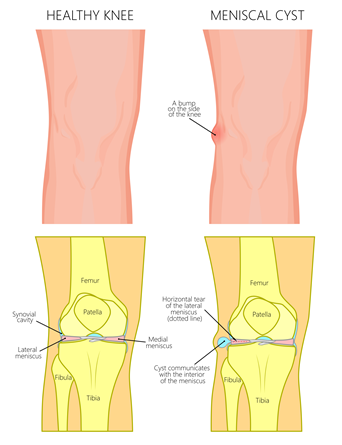
A meniscal cyst is a collection of joint fluid caused by a rupture in the cartilage of the meniscus, cartilage that protects ...