

2023-03-29 00:00:00
SHOULDER IMPINGEMENT SYNDROME
Impingement syndrome occurs more frequently in a smaller shoulder joint, namely the acromio-clavicular joint ...


A sprained or dislocated shoulder is a lesion in which the head of the humerus bone protrudes from the glenoid cavity (the head of the humerus bone, which is the main bone of the arm, is normally fixed in the glenoid cavity, which is why the shoulder joint is also called the gleno-humeral joint).
The shoulder joint is the most mobile joint in the body, allowing most of the gestures in everyday life, such as: eating, writing, washing, but it is also the most frequently dislocated joint because, due to increased mobility, its stability is affected.
After a shoulder luxation, most of the time the shoulder function is completely regained in a few weeks. However, after a shoulder dislocation, the joint may become unstable and may be prone to repeated dislocations.

The shoulder is very flexible, ensuring high-amplitude movements of the arms, which it orients in all directions. The shoulder thus allows most of the gestures in everyday life, such as: eating, writing, washing etc. In other words, keeping the shoulder mobility and its stability are very important.
The component bones of the shoulder joint are:
➢ The humerus, is the main bone in the arm
➢ The scapula or shoulder blade, is a flat, triangular bone, located in the posterior part of the shoulder.
The upper part of the scapula is formed by the acromion bone.
➢ The clavicle (it is a long bone that connects the scapula to the sternum)
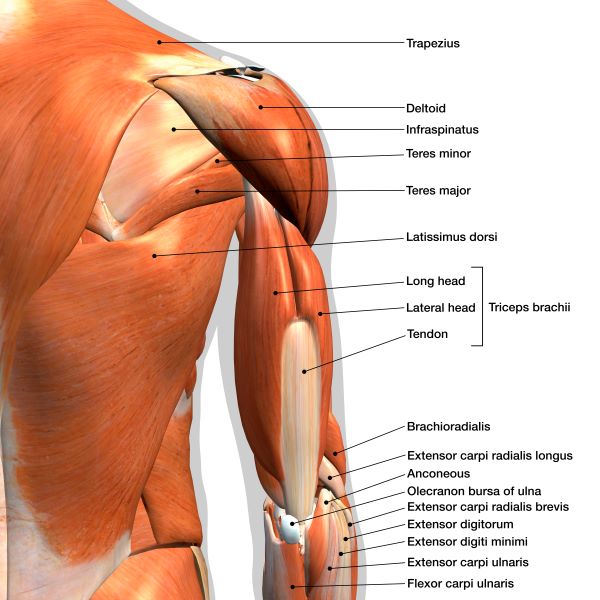
Most of the stability of the shoulder is provided by the surrounding skeletal muscles, with the help of the associated tendons and various ligaments.
Being the most mobile joint in the body, moving in several directions, the shoulder can dislocate forward, backward or downwards, but most luxations occur through the front of the shoulder. In addition, the fibrous tissue that joins the bones of the shoulder can be stretched or broken, often complicating the luxation.
In order for the shoulder to sprain, a strong force is needed, such as a sudden blow. Also, the extreme rotation of the shoulder joint can remove the head of the humeral bone from the glenoid cavity.
Thus, the shoulder can be sprained in case of sports injuries (especially in contact sports such as football and hockey but also in sports that may involve falls, such as skiing, gymnastics and volleyball) and in the case of severe trauma, such as car accidents.
First of all, the luxation of the shoulder manifests with intense pain associated with:
➢ swelling and/or bruising of the shoulder
➢ inability to move the joint
➢ numbness, weakness or tingling near the injury (at the level of the shoulder or at the level of the arm).
In a shoulder luxation, injuries and surrounding structures may suffer, more precisely a rupture of the muscle and/ r of the ligaments and tendons that strengthen the shoulder joint can also occur.
Also, damage to the nerves or blood vessels inside or around the shoulder joint may occur.
If the ligaments or tendons of the shoulder are stretched or ruptured and the nerves or blood vessels around the shoulder joint are damaged, surgery may be required to repair these tissues.
Treatment of the sprained or dislocated shoulder may involve:
One can try some gentle maneuvers that help the shoulder bones to fix themselves back in their proper positions. Depending on the intensity of the pain, these maneuvers require the previous administration of a muscle relaxant, a sedative or, rarely, a general anesthetic. Immediately after the repositioning of the bones, the pain should improve significantly.
It’s necessary if there is a tendency for recurrent dislocations of the shoulder or if there is major damage to the surrounding structures (nerves, blood vessels).
Pain reliever or myorelaxant drugs help manage pain as the shoulder heals.
A special splint or orthosis can be used, for a duration of several days to several weeks, to protect the shoulder. The duration of the immobilization depends on the nature of the dislocation and the moment of initiation of the immobilization.
The recovery program through physical therapy is started early, after a few days after the injury, some gentle exercises will be done.
The intensity of the exercises will gradually increase, the goal being to restore the entire range of movement in the shoulder joint, the muscle strength but also the stability of the shoulder.
It is important to maintain the range of motion of the shoulder joint, because inactivity can cause rigid joints. In addition, the inactivity of the shoulder for a long time can lead to "frozen shoulder", a condition in which the shoulder becomes so stiff that it can barely be moved.
As the shoulder heals, daily stretching exercises of the shoulder will be performed, but also exercises of toning (strengthening) the muscles around the shoulder, facilitating its stability, important for the prevention of relapses.
Initially, ice is applied at the level of the lesion, in sessions of 15-20 minutes, 3-5 times a day. Ice helps reduce inflammation and pain. Always between the ice and the area on which it is applied, put a thin towel, so as not to irritate the skin.
After 2-3 days, when the pain and inflammation improve, heat will be applied to the level of the lesion, in sessions of 10-15 minutes, 1-2 times a day. The heat facilitates the relaxation of the surrounding muscles.
➢ The action or movement that caused the dislocation of the shoulder will not be repeated.
➢ The resumption of sports activity too soon after the shoulder dislocation, may predispose to the appearance of other injuries of the joint or the shoulder may be sprained again
➢ To help prevent shoulder dislocations, avoid, as much as possible, falls and protective equipment will be worn in contact sports
➢ Regular physical exercise helps maintain the strength and flexibility of the joint and surrounding muscles.

I always follow professional workflow and provide you the best service with reliable costs.



Impingement syndrome occurs more frequently in a smaller shoulder joint, namely the acromio-clavicular joint ...
VERTIGO is a symptom, a condition less understood by patients who describe it as a sensation of dizziness ...
The triceps brachial muscle is a long and voluminous muscle, located on the posterior side of the arm, stretching ...