

2023-03-27 00:00:00
KNEE OSTEOARTHRITIS
Osteoarthritis is a condition in which the natural cushioning in the joint disappears due to damage to the cartilage ...


Coxarthrosis is a condition that manifests itself with wear or degeneration of the hip joint. Similar to other joints that support the weight of the body, hips are also prone to wear and arthritis as they age. What actually happens is the thinning of the articular cartilage, which normally facilitates easy movement of the joints.
Overweight people are more at risk of developing the condition, as are people with a family history of coxarthrosis
The first sign of coxarthrosis can be a small discomfort felt when waking up, at the level of the thighs, buttocks or in the groin area. The pain will be more intense as the person will be more active and it will alleviate with rest. The sooner coxarthrosis is diagnosed and the necessary treatment is initiated, the more the stiffness of the joints is prevented and the pain is controlled.
In some people the pain can radiate on the anterior side of the thigh to the knees, while other people have difficulty putting on their socks in the morning because gradually the ability to bend the hips is lost.
In the advanced stages of coxarthrosis, the pain is no longer alleviated by rest, the articular cartilage wears out completely and the bones end up rubbing against each other, which will make the displacement difficult and painful. The ability to flex, rotate or extend the hips is lost and as the movement will limited (to prevent pain), the muscles will atrophy.
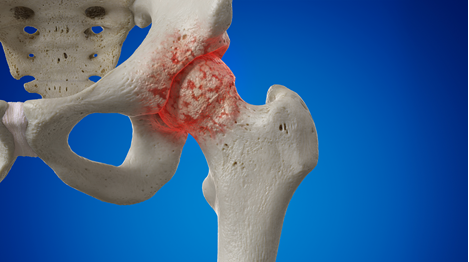
The hip joint is designed to ensure both the stability of the body and its mobility, having a deep grip, which allows a good movement but also keeps the joint safe. The stability of the hip is ensured by many ligaments and muscles, the main muscle groups being: buttocks, adductors (located on the internal side of the thigh), quadriceps (on the anterior side of the thigh) and the muscles on the posterior side of the thigh: femoral biceps, semimembranosus and semitendinous.
To maintain joint mobility, light exercises such as walking, swimming and water gymnastics are recommended. Also pedaling on the bike helps. The movement stops if the pain persists or if any discomfort occurs.
With the help of specific exercise programs, the following can be pursued:
➢ increasing joint mobility
➢ toning the stabilizing muscles of the hip
➢ regaining the range of movement and facilitating gait
Drug treatment with anti-inflammatories is indicated to reduce pain and inflammation, but it is recommended in the short term, 7-10 days.
Local applications, alternating ice and heat, a technique called contrast bathing, is an alternative that can be used in the long term to reduce inflammation and pain.
5. Rest and sufficient sleep during the night are important for the recovery of the body
6. Using a cane or a crutch when the mobility decreases will help reduce the tension placed on the hip.
➢ Maintain a normal body weight.
➢ Go to the doctor from the first symptoms to prevent aggravation.
➢ Exercise regularly!

I always follow professional workflow and provide you the best service with reliable costs.



Osteoarthritis is a condition in which the natural cushioning in the joint disappears due to damage to the cartilage ...
Trigger Ball is a simple, portable and accessible device designed to relieve pain and reduce muscle tension ...
Peroneal tendinitis is a common cause of pains that occur on the side of the ankle, due to injuries or damage to ...