



2023-03-14 00:00:00
INJURIES TO THE MEDIAL COLLATERAL LIGAMENT OF THE KNEE
The medial collateral ligament, a wide, hard band of fibrous tissue that is located on the internal side of the knee ...


Diabetes mellitus is a chronic condition that affects the way the body uses blood sugar (glucose). Glucose is essential for health because it is an important source of energy for the cells that form muscles and tissues. It is also the main source of fuel for the brain.
✓ it is a source of energy for the cells that make up the muscles and other tissues.
✓ glucose comes from two major sources: food and the liver
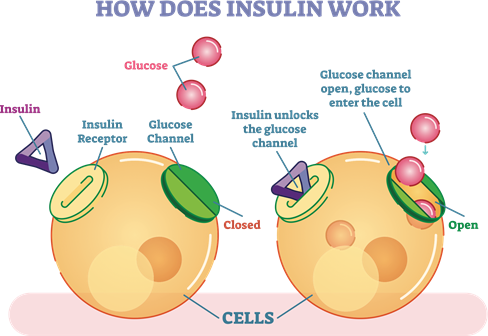
✓ sugar is absorbed into the bloodstream, where it enters the cells of the body with the help of insulin
✓ the liver stores and produces glucose
✓ when glucose levels are low, when it no food is consumed for a while, the liver breaks down the stored glycogen, in glucose, to maintain glucose levels in a normal range.
Most of the food we eat is broken down into sugar (glucose) which is subsequently released into the bloodstream. When blood sugar rises, the endocrine pancreas releases insulin. Insulin allows blood sugar to reach the body's cells to be used as energy.
✓ Insulin is a hormone secreted by the endocrine pancreas (a gland located behind and below the stomach)
✓ The pancreas secretes insulin into the blood
✓ Insulin circulates, allowing sugar to enter your cells
✓ Insulin lowers the amount of sugar in the blood
✓ As blood sugar levels decrease, so does the secretion of insulin from the pancreas.
In the case of diabetes mellitus, either the endocrine pancreas does not produce enough insulin, or the body cannot use insulin as it should. Thus, when there is not enough insulin or cells no longer respond to insulin (they do not use it), excess sugar remains in the blood. Over time, serious health problems can occur, such as heart disease, loss of vision, kidney disease.
There are three main types of diabetes
1. Type 1 diabetes
It is believed to be caused by an autoimmune reaction (the body fights against it by blocking the production of insulin). About 5-10% of people with diabetes have type 1 diabetes. The symptoms of type 1 diabetes often develop rapidly, most affected being children, teenagers and young adults. In type 1 diabetes mellitus, insulin is administered daily. At the moment, there are no data on the possibility of preventing type 1 diabetes.
2. Type 2 diabetes
In type 2 diabetes, the body does not use insulin well and cannot keep blood sugar at normal levels. About 90-95% of people with diabetes have type 2. It develops over several years and is usually diagnosed in adults (but lately it is diagnosed more and more in children, teenagers and young people). The biggest risk is that it may be asymptomatic, which is why frequent blood glucose testing is recommended. Unlike type 1 diabetes, type 2 diabetes can be prevented or delayed by adopting a healthy lifestyle, by maintaining weight within normal limits and by introducing movement into everyday life.
3. Gestational diabetes
It develops in pregnant women who have never had diabetes. In case of gestational diabetes, the child is at a higher risk of developing health problems, is likely to suffer from obesity in childhood or adolescence and it is possible to develop type 2 diabetes later. Gestational diabetes usually disappears after the birth of the child, but the risk of type 2 diabetes increases as time goes on.
PREDIABETES is a metabolic disorder, prior to diabetes if it is not diagnosed and treated in time. Prediabetes is asymptomatic, is discovered at the usual blood tests and is accompanied by an increased risk of developing diabetes and cardiovascular disease.
Symptoms of diabetes vary depending on how much blood sugar is increased. Symptoms may not exist in prediabetes and/or type 2 diabetes. In contrast, in type 1 diabetes, symptoms tend to appear quickly and be more severe.
The most well-known signs and symptoms of type 1 diabetes and type 2 diabetes are:
✓ Increased thirst
✓ Frequent urination
✓ Constant sensation of hunger
✓ Unexplained weight loss
✓ The presence of ketones in the urine (ketones are a byproduct of the breakdown of muscles and fats, which happens when there is not enough insulin available)
✓ Fatigue
✓ Irritability
✓ Blurred vision
✓ Slow healing wounds
✓ Frequent infections such as gum or skin infections
If any of the possible symptoms of diabetes are observed, both in adults and children, we consult our doctor. The earlier the condition is diagnosed, the earlier the treatment can begin, and the body suffers less. After a diagnosis of diabetes mellitus is made, a careful medical follow-up is necessary until the blood sugar level stabilizes.
Active lifestyle, consumption of healthy foods, daily exercise, maintaining body weight within normal limits as well as self-management of diabetes with the administration of insulin and medication, if necessary, can significantly improve the impact of diabetes on the quality of life.

I always follow professional workflow and provide you the best service with reliable costs.



The medial collateral ligament, a wide, hard band of fibrous tissue that is located on the internal side of the knee ...
Spondylitis is a type of arthritis, that is, an inflammation of a joint, which generally affects the ...
Guyon canal syndrome is a nerve compression that affects the ulnar nerve (cubital) while passing through a ...