



2023-04-10 00:00:00
FACIAL FRACTURE
The facial fracture involves the rupture of one of the bones of the face, more precisely the bones around ...


Most adult individuals have experienced an episode of back pain over time. In the case of some people, the back pain is temporary and disappears in 2-4 weeks, while other people are experiencing chronic pain, which can last for years.
The back is divided into two parts, respectively the upper part or the thoracic spine consisting of 12 vertebrae and the lower part or the lumbar spine consisting of 5 vertebrae. Usually, the pains in the lumbar spine are much more frequent than in the thoracic spine, but the treatment follows the same principles, both in the case of low back pain and in the case of thoracic pain.
The vertebrae are surrounded by muscles and ligaments that give the spine stability, support and of course movement. The lumbar spine articulates on the lower section with the sacrum bone, which is part of the pelvis, the nerves that innervate the lower limbs, including the sciatic nerve, coming from the lumbar spine as well.
To discover the possible causes of back pain we will analyze the anatomical structures in the back.
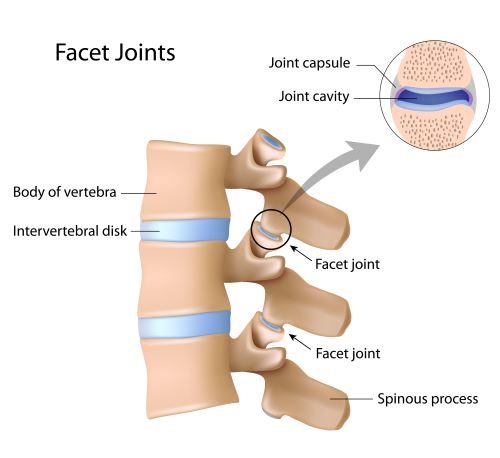
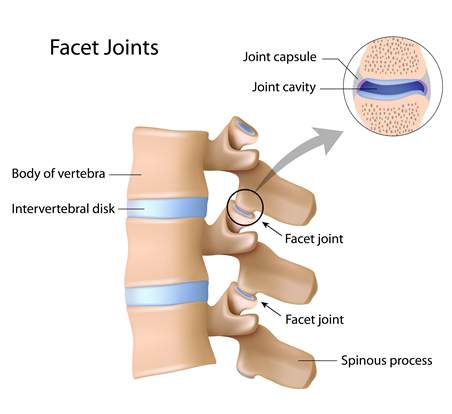
Also called joints with small sides, the articular facets are small stabilizing joints that are found at every level of the spine, except for the upper level, which provide about 20% of the torsional (twisting) stability in the neck and lumbar area. The articular facets can become tense, be injured or simply become rigid, blocked and inflamed. Joint facet syndrome is a common cause of back pain.
Muscle pains in the back are common and occur due to fatigue or due to an acute muscle problem. Most of the time they are caused by poor posture because we tend to do most of the daily things with our backs bent forward. We rarely extend or arch the back. By bending the back forward, the muscles must bear a considerable weight. Thus, after a few months, fatigue, muscle pain and implicitly back pain appear.
These are structures of fibrocartilaginous nature, placed between two vertebrae. They are essential for the movement of the spine and act as a ligament, tying a hearth to the next, but especially have a role in the absorption of shocks significantly diminishing the impact between the vertebrae. Intervertebral discs may suffer mechanical or degenerative damage, the main cause being effort in inadequate postures. For example, standing position charges the vertebrae and intervertebral discs five times more than the lying position. Activities performed with the body bent forward, plus repetitive hyperextension movements and possibly lifting weights can also affect the intervertebral discs and cause back pain. Also, the discs can suffer injuries and can move between the vertebrae, the most well-known term being the herniated disc. Basically, the disc slips back and can penetrate a nerve (sciatic nerve for example) thus causing numbness at the level of the lower limb, more precisely on the innervation territory of that nerve.
The vertebrae, as well as the articular facets and intervertebral discs are at risk of cracking or developing osteoarthritis. These conditions are common with the aging process. In addition, at the vertebral level, an inflammatory process can also develop, which causes intense pain in the back.
They are the least affected of all the anatomical structures in the back. Ligaments can suffer injuries during forced movements or in the case of sports and/or car accidents.
Other symptoms are also associated with back pain, such as:
➢ Numbness sensation in the hands and/or feet
➢ Difficulty in walking, feeling of weakness in the legs
➢ Disorders in the function of the bladder and intestine
➢ Numbness in the groin
The gradual increase in physical activity, carried out daily, helps to reduce stiffness and back pain and improves physical condition. Swimming and cycling are safe activities for people suffering from back pain.
Administered in the acute phase, they help relieve pain, thus allowing the continuation of physical activity that accelerates the recovery process. Anti-inflammatories are recommended but for a short term.
It is recommended to take a break or to change the position and/or activity every 20-30 minutes. Prolonged sitting or standing as well as prolonged walking can cause stiffness and discomfort in the back. By alternating positions or daily activities, back pain should improve.
In the acute phases of pain, in the first 3-5 days from onset, ice is applied to reduce pain and inflammation. Subsequently, heat is applied to reduce contracture and muscle stiffness. Both ice and heat are applied in sessions of 15-20 minutes, several times a day and always with a towel on the area on which it is applied.
It can be affected by back pain. For a restful sleep, a pillow is placed under the knees in case of sleeping on the back or between the legs in case of sleeping on one side. A proper mattress and pillow improve the quality of sleep. It is not recommended to sleep on the floor or on the chair.
They have an essential role in managing and treating back pain. Regular practice of stretching exercises and exercises to strengthen the back muscles helps by:
• Improving posture
• Reducing muscle stiffness
• Increasing flexibility and joint mobility
• Reducing pain
It is recommended to follow the advice of a physical therapist.

I always follow professional workflow and provide you the best service with reliable costs.



The facial fracture involves the rupture of one of the bones of the face, more precisely the bones around ...
Although pregnancy seems like the perfect time for "laziness", fatigue can be felt more than usual and the back may ...
Bursita popliteala care reprezinta inflamarea bursei popliteale, este cauzata de un exces de lichid provenind ...