


2023-03-07 00:00:00
COXA VALGA
Coxa valga is a deformation of the hips, in which the angle between the gap and the body of the femur is more than ...


The facial fracture involves the rupture of one of the bones of the face, more precisely the bones around the eyes, nose, jaw and cheekbones, possibly associated with the damage to the surrounding tissue.
Facial fracture is often the direct result of a facial injury (motorcycle, car and bicycle accidents - all can cause injuries that can result in fracture of the face bones)
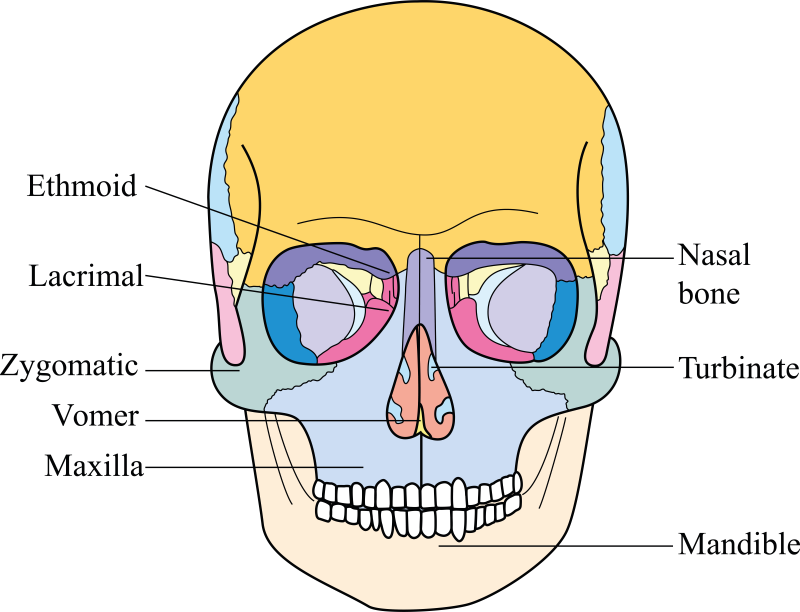
The facial skeleton comprises the facial bones that form part of the skull, the rest of the skull being the braincase.
The role of the facial skeleton is to protect the brain and provide a framework so that the soft tissues of the face and especially the muscles that are so many on the facial bones, can achieve deglutition, breathing, speech and expression. Also, the facial skeleton protects and houses the organs that control vision, taste and smell. The main bones of the face are: jaw, mandible, nasal bones, frontal bone and zygomatic bone. The anatomy of the facial bones is quite complex and elegant at the same time.
Treatment will depend on the location and extent of the lesion. The goal of the treatment for facial fractures is to restore the normal appearance and function of the injured areas.
During a closed reduction procedure (without the need for an incision), the broken bones will be reassembled in the initial position.
The closed reduction is often done when the nose is broken.
Open reduction involves surgery that requires an incision to reposition the fractured bones.
A complex fracture with several broken bones will require reconstructive surgery.
Endoscopy is an intervention that uses a device (endoscope) to visualize the inside of the sinuses. Also, if there are small pieces of broken bone, they can be removed by endoscopy.
Decongestant drugs help improve breathing.
Anti-inflammatory and pain relievers help reduce pain and inflammation, while antibiotics help treat a possible infection associated with the fracture.
Ice applied topically, in sessions of 5-10 minutes, 1-3 times a day, significantly helps reduce inflammation. Always put a thin towel between the ice and the area on which it is applied.
When the facial fracture also involves the teeth, orthodontic treatment may be required, especially if the teeth do not line up after affecting the jaw.
➢ Avoid sleeping on the injured side of the face as the pressure can cause additional damage.
➢ Try sneezing with your mouth open to minimize pressure on the broken bones.
➢ Avoid blowing your nose as much as possible, as it can cause more damage, especially if the fracture is close to the eyes. The pressure from blowing the nose can pinch the nerve of the eye and cause permanent damage.
➢ The mouth will be cleaned carefully. Although teeth cleaning can be difficult when there is an injury or fracture near the mouth, a soft toothbrush or oral shower can help sanitize the mouth.
➢ Certain orthopedic devices may be useful for supporting the bones of the face until they are restored.

I always follow professional workflow and provide you the best service with reliable costs.



Coxa valga is a deformation of the hips, in which the angle between the gap and the body of the femur is more than ...
Hip fracture is a rather serious injury, especially for the elderly, both due to the fracture itself and due to associated ...
The tibia and the peroneum (also called the fibula) are the two long bones that make up the skeleton of the calf ...