


2023-03-29 00:00:00
DE QUERVAIN TENOSYNOVITIS
De Quervain tenosynovitis or tendonitis is a painful inflammation of the tendons of the thumb, named ...


The skeleton of the forearm consists of two long bones, radius and ulna, which form the radioulnar joint and which are united by the interosseous membrane.
Distal ulna fractures are quite frequent and occur either isolated, only at the level of the ulna, following the action of a direct force or simultaneously with the radius fracture following a fall on the stretched arm.
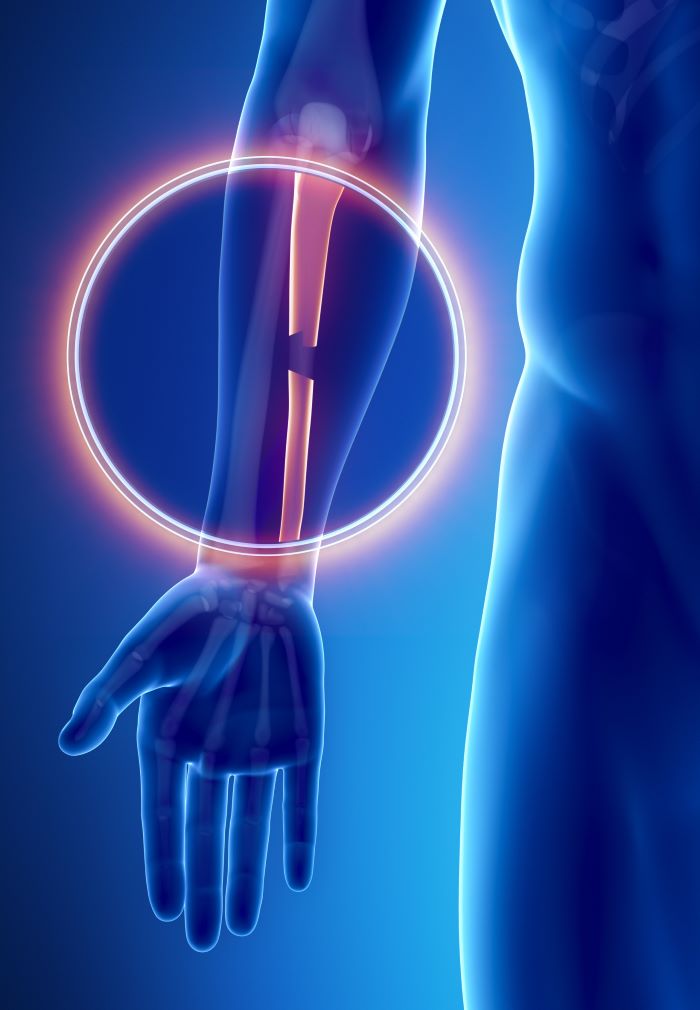
They can occur in different areas of the ulna, but most frequently the distal end of the ulna fractures. When the ulnar styloid process fractures, that is, the bone part at the distal end of the ulna, the fracture is called the ulnar styloid fracture.
The distal area of the ulna is important because it is an area with many ligaments that help the stability of the wrist.
To confirm a suspicion of ulna fracture, it is important to locate the area of maximum pain and sensitivity. For a concrete visualization of the fracture site but also of other concomitant injuries, it is advisable to perform an X-ray.
As immediate symptoms, a distal ulna fracture is manifested with intense pain and sensitivity to touching the fractured area, bruising and swelling (swelling) of the wrist.
In order to obtain a good result after a distal ulnar fracture and the return of the forearm and hand to full function, it is very important to solve the fracture early.
It is necessary if the fracture involves displacement and/or when the ligaments or articular cartilage are affected, the wrist becoming thus unstable. After surgery, the healing time is 4-6 weeks and is greatly influenced by the postoperative care and the post-operative physical therapy program.
If the fractured portion is small and does not affect the stability of the radioulnar joint, immobilization of the fractured area in the plaster splint for 3-4 weeks is the appropriate method. The recovery program begins after the immobilization period.
Both in the case of operated , as well as unoperated fractures, at the end of the immobilization period, the following are to be pursued:
Reducing pain and inflammation
For this, ice will be applied locally, in several sessions per day, with a duration of 10-15 minutes. Always put a towel between the ice and the area on which it is applied in order to not irritate the skin
Activating the circulation
By raising the hand above the level of the heart and local massage, starting from the level of the fingers to the forearm, work to increase blood flow.
Stretching exercises and active exercises help:
➢ restore the functionality of the fractured area
➢ increase muscle tone
➢ increase joint mobility
➢ prevent relapses and/or other injuries
The degree of complexity and loading of exercises will gradually increase, under the guidance of a physical therapist.

I always follow professional workflow and provide you the best service with reliable costs.



De Quervain tenosynovitis or tendonitis is a painful inflammation of the tendons of the thumb, named ...
Since the kneecap serves as a shield for the knee joint, it is quite at risk of injury. Direct fall on the knee, is one of the ...
The cervical spine is composed of 7 vertebrae that stretch from the base of the skull to the upper part of the thoracic ...