

2023-03-14 00:00:00
THE IMPORTANCE OF POSTNATAL EXERCISES
Physical exercise after childbirth represents one of the best things a woman can do for herself. Although it is quite ...


Stress fracture is the most common type of lower back overstrain injuries in people who do sports, as well as in children who are growing up. Lumbar stress fracture is also known as spondylolisthesis.
Spondylolisthesis is a common cause of back pain, but it is not a serious condition, there are several therapeutic options for treating it.
A vertebra is made up of different sections. Between the back and front of the vertebra there is a "bridge", known as interarticularis pars.
What is a pars defect?
It is a crack or even a fracture at the level of this "bridge", which can be unilateral (on one side of the vertebra) or bilateral (on both sides of the vertebra).
If, due to repeated stress on the spine, a bilateral pars defect occurs, for example a crack or a fracture on both sides of the vertebra (as it happens in 80% of cases) it is possible that the vertebra slides slightly forward, which is also known as SPONDYLOLISTHESIS OR LUMBAR STRESS FRACTURE.
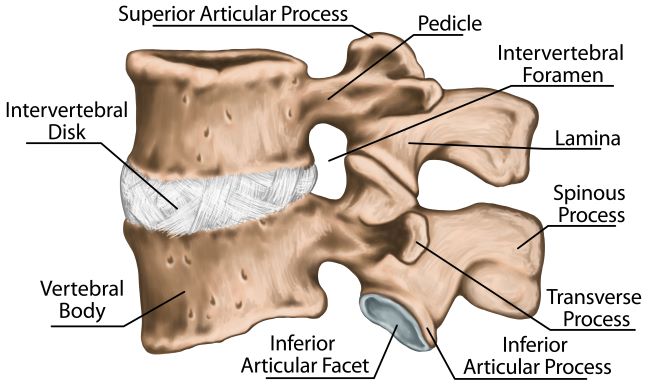
The lumbar spine consists of 5 strong vertebrae (L1-L5) that provide support for approximately the entire body weight.
Between the vertebrae there are the intervertebral discs, which are structures of fibrocartilaginous nature, and which are essential for the movement of the spine. They act as a ligament, tying one vertebra to the next, but especially they have a role in the absorption of shocks, significantly diminishing the impact between the vertebrae. The lumbar intervertebral discs are the most demanded, because the greatest pressure acts on them.
Ligaments, nerves and muscles are additional components of the spine. All these structures work together ensuring the strength and flexibility of the lumbar spine.
Most commonly, the lumbar stress fracture occurs either at the level of the L4 vertebra or at the level of the L5 vertebra. This is the area that tends to endure the greatest amount of stress when practicing a sport.
To confirm the diagnosis, the doctor will recommend performing an MRI examination (nuclear magnetic resonance).
Firstly, it manifests with pain, felt throughout the area of the lower back.
The condition can also cause spasms or muscle contractions that stiffen the back, as well as contractions of the muscles located on the back of the thigh, which can lead to changes in gait and posture.
Initially, traditional (non-surgical) treatment is recommended, which includes rest, drug treatment and physical therapy.
Avoid sports activities until the symptoms improve significantly or disappear, as well as other daily activities that cause pain.
Sports such as lifting weights, football or gymnastics put a significant stress on the lumbar spine, a situation in which it is recommended to resume them gradually.
Nonsteroidal anti-inflammatory drugs (ibuprofen, paracetamol, diclofenac, voltaren, etc.) in the form of tablets or local ointments, help reduce pain and inflammation. They are recommended but for short periods of time, 7-14 days maximum.
Exercise programs will be practiced, aimed at toning the muscles of the lower back and abdominal muscles, but also increasing the flexibility of these muscle groups through progressive stretching exercises.
Also, through exercise programs, work will be done to correct muscle imbalances, if any.
In the case of children and athletes, especially if the condition is of traumatic cause, wearing an orthosis or a detachable orthopedic corset (lombostat), can limit movement in the affected area, accelerating healing.
Due to the fact that traditional treatment has good results, surgery is less and less used, being indicated only in cases where a nerve is trapped, or the pain is uncontrollable, or the patient does not respond well to conservative treatment.
Under these situations, surgery involves the fusion of the vertebra, thus increasing its stability.
➢ People who suffer a lumbar stress fracture will avoid exaggerated and prolonged extension (arching) of the back.
➢ Attention will be paid to children in the process of growing up, especially when there is accelerated growth.

I always follow professional workflow and provide you the best service with reliable costs.



Physical exercise after childbirth represents one of the best things a woman can do for herself. Although it is quite ...
A greenstick fracture refers to bending or at most cracking a bone, instead of simply breaking into separate ...
Genu varum is a deformation of the knees marked outwards, which means that the lower leg is inclined inwards in ...