


2023-03-03 00:00:00
THE PARKINSON DISEASE
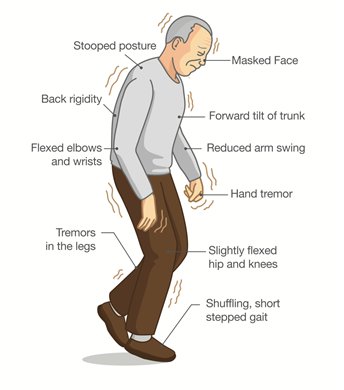
Parkinson's disease is a progressive, degenerative disease that affects about 7-10 million people worldwide ...


Hallux rigidus (big toe) is actually a form of degenerative arthritis that affects the joint at the base of the big toe and that begins long before the first symptoms appear.
Initially it manifests with pain and stiffness in the joint and with time bending the thumb becomes more and more difficult. If normally the big toe can bend up to about 65-85°, when stiffness occurs it can bend up to about 30°.
This form of arthritis is often the result of the wear of the joint surface or bone spurs that affect the joint at the base of the hallux (metatarsal-phalangeal joint).
Most commonly is manifested after the age of 50, women being more affected compared to men. Hereditary factor (transmission in the family) has an important role and most of the people who have a member in the family with this condition develop stiffness in both thumbs.
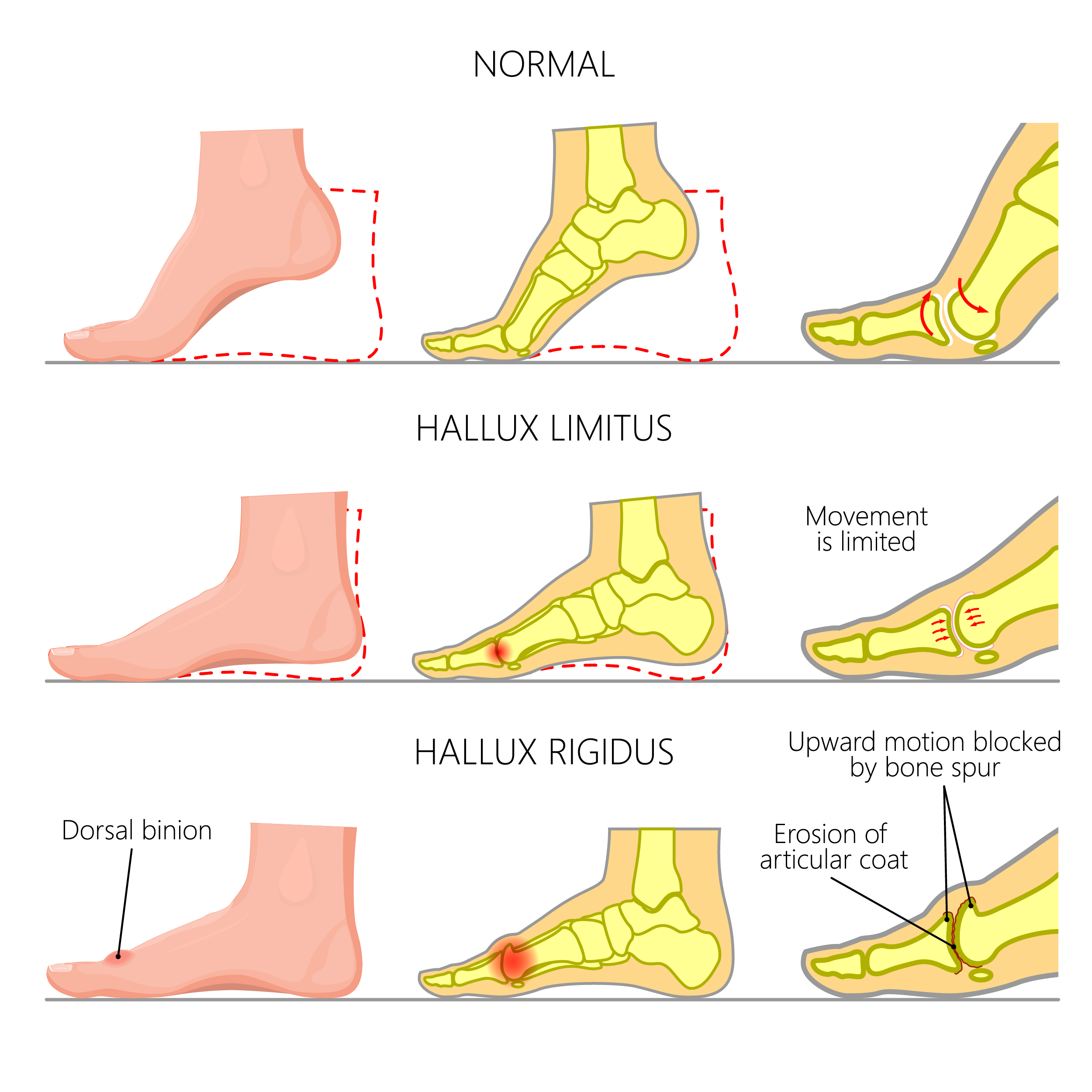
The joint that is located at the base of the thumb is known as the metatarsal-phalangeal joint. Like any other joint in the body, it is covered with an articular cartilage.
Articular cartilage is an unvascularized tissue that covers the bone components of the joint. Its main functions are to allow a good articulation (ensures minimal friction inside the joint) and to cushion the shocks to which the joint is subjected (it can support compression, tensioning and shear forces).
When the articular cartilage is hurt/injured, it can begin to degenerate, and the joint surface will end up wearing out until the bones rub against each other.
In this process of degeneration of the articular cartilage, bone spurs will form around the metatarsophalangeal joint, which leads to restriction of movement, especially bending (upward) movement of the thumb. Also, bone spurs can put pressure on the surrounding nerves causing numbness in the big toe.
The initial mild symptoms slightly worsen over time and include:
➢ pain and stiffness in the thumb while walking that can be severed when weather is wet and/or cold. As time passes, pain can also occur during resting
➢ inflammation around the joint at the base of the big toe
➢ limited mobility that leads to the inability to bend the big toe
Pain in the knee, hips or lower back may occur if the symptoms lead to a limped gait.
Anti-inflammatory drugs (ibuprofen, etc.) help control pain, inflammation and local swelling, symptoms that usually accompany degenerative arthritis. But they are recommended for short periods of time, 7-14 days maximum. If the pain persists, cortisone injections (a stronger anti-inflammatory) can be administered locally, which provides better pain control
Alternation of heat and ice, applied topically to the painful area, several times a day or alternative hot and cold baths help reduce pain.
Physical therapy (specific exercise program to improve the mobility of the thumb) along with manual therapy (massage and manipulation of the soft tissue around the affected joint), as well as physiotherapy and/or osteopathy are one of the most useful forms of treatment. Mobilizing the metatarsophalangeal joint, as well as other rigid joints in the foot, helps to alleviate the pressure on the hallux and improve the forces that act at the level of the foot.
Wearing special shoes with a closed tip and a rigid sole helps improve symptoms in the initial stages of the condition. The rigid sole prevents exaggerated bending of the toes while walking and allows the shoe to take part in the bending force.
➢ Avoid high-heeled shoes
➢ Avoid high-impact activities such as running

I always follow professional workflow and provide you the best service with reliable costs.



Parkinson's disease is a progressive, degenerative disease that affects about 7-10 million people worldwide ...
The brachial biceps muscle is a long, strong muscle, located on the anterior side of the arm. It is inserted on the ...
Kinesio taping is a therapeutic technique that consists in the application of strips (kinesio tape) in order to accelerate ...