


2023-03-29 00:00:00
Piriformis syndrome
Piriformis syndrome is a relatively unusual neuromuscular disorder, which manifests every time the piriformis muscle ...


Congenital hip luxation occurs when a child is born with an unstable hip and is caused by abnormal formation of the hip joint during the early stages of fetal development. This instability worsens as the child grows.
The hip or coxo-femoral joint is a complex, strong joint that supports the entire weight of the human body having an important role both in static position, as well as in locomotion.
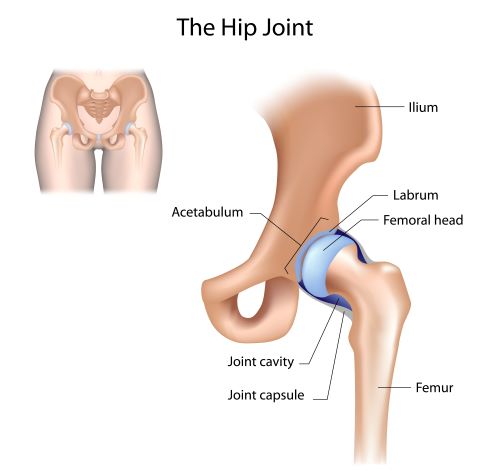
The hip joint is the largest joint in the body and consists of:
1. The spherical head of the femoral bone which represents practically about 2/3 of the joint
2. The acetabular or glenoid cavity (part of the coxal bone) in which the femoral head is fixed
Basically, the hip joint connects the femur (thigh bone) to the pelvis. The femoral head nests in the acetabular cavity to create the joint. The surrounding ligaments and the joint capsule keep the hip joint seif.
The cause is unknown in many cases. Factors contributing to the development of congenital hip luxation include: a low level of amniotic fluid in the uterus, natural childbirth when the baby's hips come out first, family history. Congenital hip luxation is more common in the first pregnancy, because the uterus has not been stretched, girls are more prone than boys.
It can be either asymptomatic (without symptoms) and be discovered at a routine medical consultation or it can manifest with:
➢ legs facing outwards or seemingly different in length
➢ the internal folds of the thigh are asymmetrical or numerically unequal (there are several on the side with luxation), due to the relaxation of the adductor muscles on the sprained side
➢ buttock folds are uneven
➢ in girls the inclination of the vulvar slit towards the sprained side is noticeable.
➢ delayed motor development, which affects the way the child sits and moves, walking is achieved at the age of about 18-20 months
➢ limped gait, characteristic: in unilateral luxation, at the moment of support on the sprained lower limb, the shoulder on that side also tilts on the same side, in bilateral luxation, the inclination of the shoulders alternates in relation to the lower supporting limb (the "duck" gait).
➢ in older children, adduction of the thighs is associated, lumbar lordosis (because of the anterior tipping of the pelvis while walking), pain and fatigue while walking.
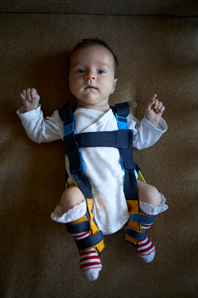
➢ The Pavlik harness
For children diagnosed before the age of 6 months, it is recommended to wear Pavlik harness that consists of webbing and several leather straps that "fix" the baby with flexed knees and thighs in abduction (legs unfolded). The harness is fixed under medical supervision and for time intervals established by the doctor. The Pavlik harness should never be applied directly to the skin because it can cause important skin lesions.
➢ Surgery
If the Pavlik Harness is not successful or the luxation is diagnosed after the age of 6 months, surgery may be necessary and may include the lengthening of the tendons, the removal of obstacles, if any, before handling and fixing the hip in its correct position. Once the hip is in the correct position, the legs and hips will be immobilized in the plastered device, for about 12 weeks.
➢ Pelvic osteotomies
Children over 18 months of age or those who have not responded to other treatments, may need to reconstitute the hip by reshaping the femoral head and fixing it in the acetabular cavity.
➢ Physical therapy
It will start early, at the recommendation of the pediatric orthopedic doctor or the medical recovery doctor and consists of specific exercises aimed at:
✓ correcting the hip deficiency as well as the entire kinematic chain of the lower limb to avoid the appearance of posture and gait disorders
✓ toning of the paravertebral muscles
✓ gait education
➢ after birth, before leaving the hospital, check if the doctor examined the newborn for signs of congenital hip luxation
➢ in the first year of the child's life go to the doctor constantly to examine the hips
➢ delays in motor development, such as rolling, crawling, walking in 4 delayed paws, may be a sign of congenital hip luxation, which is why you should go to the doctor for regular check-ups
➢ the child should not be "rushed" to stand up
➢ avoid falls because they can cause subluxations.

I always follow professional workflow and provide you the best service with reliable costs.



Piriformis syndrome is a relatively unusual neuromuscular disorder, which manifests every time the piriformis muscle ...
The meniscus rupture is one of the most common knee injuries . Any action or activity that involves twisting or rotating ...
Carpal tunnel syndrome is caused by compression of the median nerve. The carpal tunnel is a narrow canal, surrounded ...