


2023-03-27 00:00:00
LUMBOSCIATICA
Lumbosciatica or sciatica, is a condition that manifests with pain in the lumbar spine, caused by irritation or compression ...


The 12 pairs of cranial nerves represent the routes through which the brain analyzes and controls the information received from the structures located at the level of the head and neck. Cranial nerves leave the skull through certain cracks or holes and divide the structures in the body.
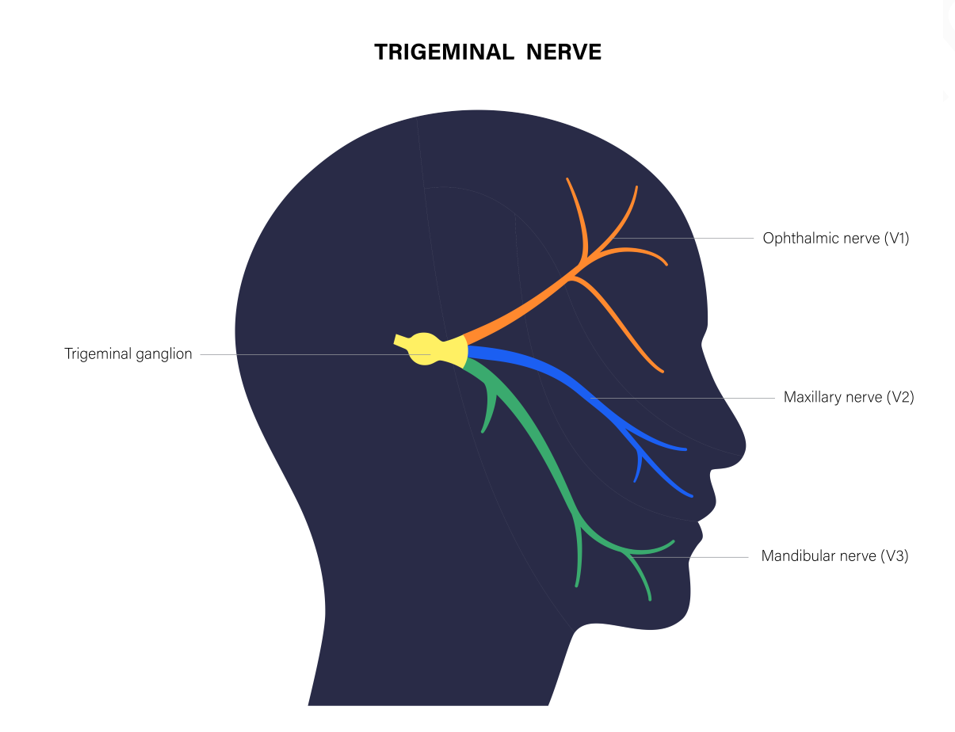
It is one of the 12 pairs of cranial nerves, has 3 branches (olfactory, maxillary and mandibular) and is responsible for the sensitivity to the skin. It also has a role in the raising - lowering and forward - backwards projection of the mandible as well as in producing tears.
Trigeminal neuralgia is a condition caused by the disturbance of the function of the trigeminal nerve. It usually manifests after the age of 50 and can be more common in women
➢ idiopathic trigeminal neuralgia (of unknown cause), without neurovascular compression
➢ classical trigeminal neuralgia, with neurovascular compression and with morphological changes of the trigeminal root
➢ secondary trigeminal neuralgia, occurring as a result of neurological disorders.
1. Pressure exerted on the trigeminal nerve by an abnormal blood vessel
2. Hardening of blood vessels that can occurs with aging
3. Stroke
4. Brain tumor
5. Hypertension
6. Cranio-facial trauma
7. Multiple sclerosis
The predominant symptom in the case of trigeminal neuralgia is intense pain with sudden onset, usually localized on a single part of the face, in the distribution territory of one or more branches of the trigeminal nerve. The maxillary branch is most commonly affected, pain appearing in the upper lip, maxillary gum and the base of the nose.
The mandibular branch is the second most affected branch, with the appearance of pain in the chin, gum and lower lip and the ophthalmic branch is less often involved, with pain present above the eyes.
Patients describe pain as being similar to an electric shock or as a stab.
In terms of duration, the pain may persist for a few seconds or minutes but there are also cases when it can persist for up to several days or weeks, with short periods of remission.
There may also be spontaneous episodes of pain, triggered by dental brushing, chewing or touching the face. Sometimes the pain can be preceded by a burning sensation or pressure.
As time goes by, painful episodes can amplify and occur more often.
Other symptoms that can accompany the pain are:
1. Anxiety
2. Excessive lacrimation
3. Rhinorrhea
4. Headaches or shoulder pain
5. Facial swelling
6. Lack of sensitivity of the affected area
Trigeminal neuralgia can be triggered by harmless stimuli, such as: brushing your teeth, chewing, touching your face, low temperatures or wind and is one of the most painful conditions that a person can experience.
Very rarely painful attacks can occur during sleep.
Anti-inflammatory and pain reliever drugs are recommended.
Botulinum toxin type A injections, as association therapy, are indicated for medium-term pain relief. As side effects, however, the weakness of the facial muscles may occur in the injected area or hematoma at the injection point.
It is indicated if the pain persists after the administration of the drug treatment. It is minimally invasive, there are modern techniques that result in the decompression of the trigeminal nerve and the disappearance of pain.
Laser therapy is especially indicated, resulting in pain relief and increased local blood circulation.
It is indicated for restoring the affected muscle function and for reducing pain, using:
➢ relaxation techniques
➢ mobilization of the head and neck
➢ active exercises.
Therapeutic massage of the face, with the avoidance of trigger points, also helps relieve symptoms
In conclusion, trigeminal neuralgia is a rare condition, often associated with intense and debilitating pain. It is important that the diagnosis is correct and for cases refractory to treatment it is important to have a good collaboration between neurologist, neurosurgeon, imaging, psychologist and physical therapist in order to find the best therapeutic solution.

I always follow professional workflow and provide you the best service with reliable costs.



Lumbosciatica or sciatica, is a condition that manifests with pain in the lumbar spine, caused by irritation or compression ...
The glenohumeral internal rotation deficit is simply a loss of the internal rotational movement of the shoulder ...
Osteonecrosis of the hip occurs when the bone tissue dies, most commonly due to an inadequate supply of ...