


2023-03-27 00:00:00
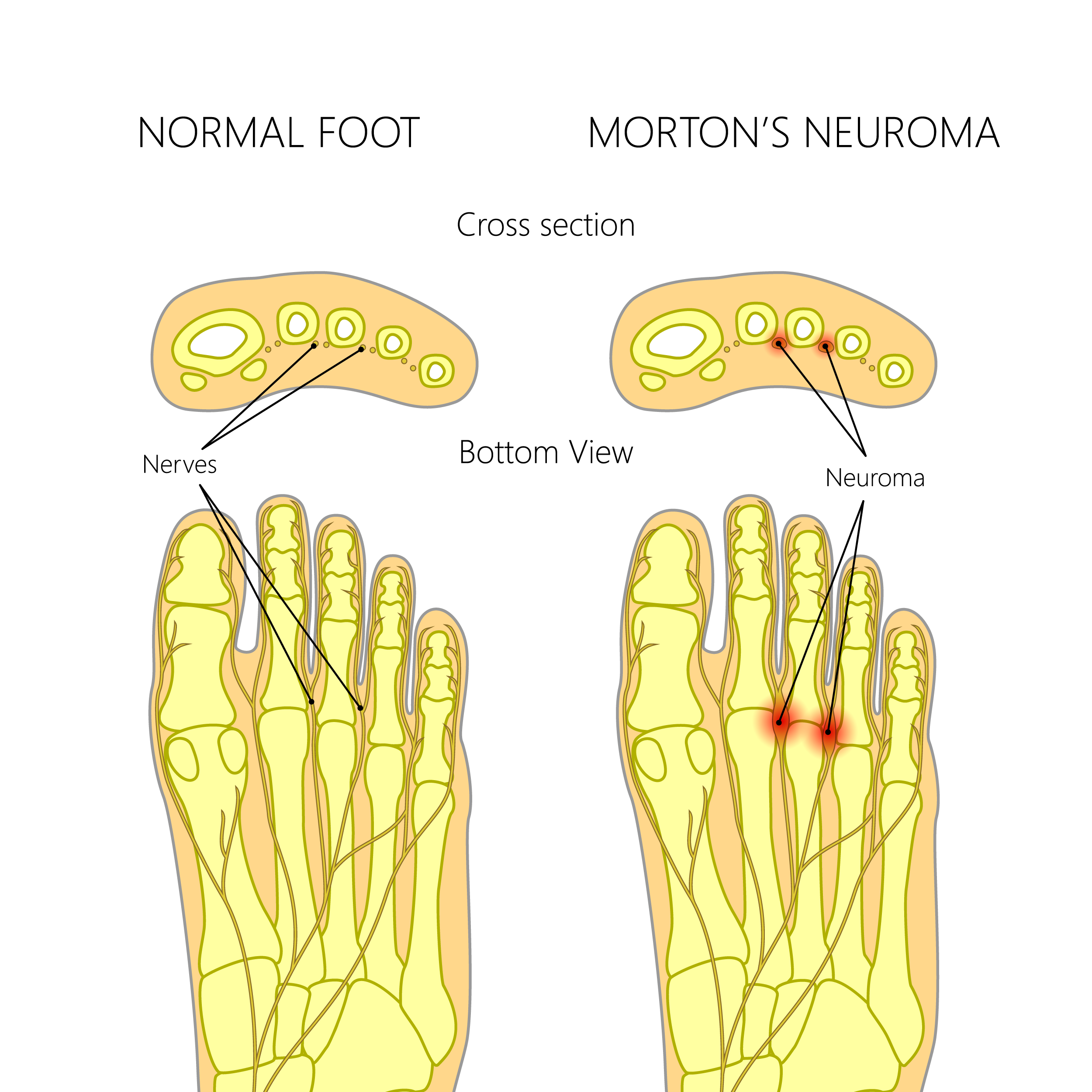
MORTON'S NEUROMA
Morton’s neuroma is a painful condition that affects the flat part of the foot, at the level of the metatarsus, usually ...


Osteonecrosis of the hip occurs when the bone tissue dies, most commonly due to an inadequate supply of blood to the bone (osteo means bone and necrosis - cell death). Osteonecrosis can end up leading to small gaps within the bones and eventually the bone gives up.
Of all the joints in the body, the hips seem to be the most affected by osteonecrosis, especially the head of the femur bone, men between the ages of 30 and 60 being more likely to suffer from this condition.
Most commonly, osteonecrosis of the hip occurs secondary to hip arthritis.
Another cause is the interruption of the blood flow from different sections/parts of the bone, after a fracture or if the joint has been dislocated.
Excessive alcohol consumption was attributed to the development of bone necrosis.
The long-term use of steroids, in high doses, has been associated with the aggravation of osteoporotic bone lesions, which can later result in osteonecrosis of the hip (steroids are natural organic substances, present in various hormones in the body, with an important biological role. Natural steroids include male sex hormones - testosterone and female - estrogen. Steroids synthesize protein and help increase muscle mass, which is why steroid supplements are taken by people who want a more developed muscle mass).
Dilipidemia (blood fat) tends to be the most common cause that limits or even blocks the blood supply to the bones, while it can favor bone necrosis.
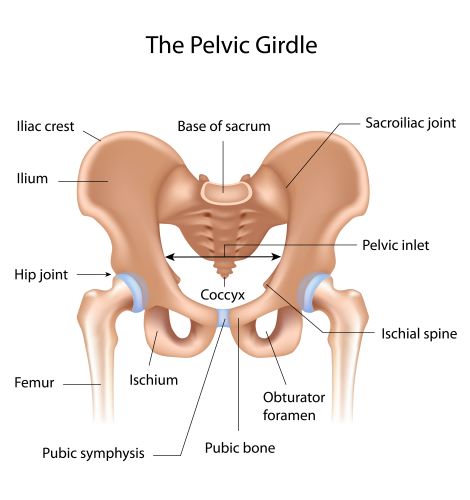
The hip joint is the largest and most mobile joint in the body and consists of:
➢ The spherical head of the femoral bone which represents practically about 2/3 of the joint
➢ The acetabular or glenoid cavity (the part of the coxal bone) in which the femoral head is fixed
Basically, the hip joint connects the femur (thigh bone) to the pelvis.
The femur, the largest bone in the body (in adults it measures 40–50 cm), has at its upper extremity the femoral head, which is connected to the body of the femur by means of the femoral gap. At the union of the femoral gap with the femoral body there are two protrusions, called the large trochanter and the small trochanter. These protrusions of the bone(trochanters) allow the muscles to attach to the bone.
The large trochanter is the place where the buttock muscles meet and perform the abduction movement of the hip (bringing the lower limb to the side).
The small trochanter is the place where the iliopsoas muscle is attached to the hip joint to ensure the flexion movement of the hip (raising the knee to the chest).
The blood supply to the hip joint comes directly from the femoral artery (a major blood vessel coming from the aorta).
In order to diagnose hip osteonecrosis, it is necessary to perform an X-ray or an MRI examination.
Reduce the activities that produce or aggravate the pain. In this way, the stress and the weight on the affected bone are avoided, slowing down its deterioration.
Nonsteroidal anti-inflammatories in the form of tablets or local ointments (ibuprofen, paracetamol, diclofenac, voltaren etc.) help relieve inflammation and pain associated with hip osteonecrosis.
Osteoporosis medications (Calcium, vitamin D3 etc.) can help slow the progression of necrosis.
Anticoagulant drugs (which thin the blood) are recommended for people who have blood clotting disorders, thus preventing the formation of blood clots in the vessels that irrigate the bones.
Blood flow can be slowed down in the affected area and by a large amount of fat in the blood (dyslipidemia) and for prevention it is recommended to reduce the amount of fat in the blood with the help of diet and/or specific drugs.
Light exercise is recommended to increase blood flow to the affected area. Also, certain specific exercises, performed under the guidance of a physical therapist, are necessary to improve or maintain the range of movement in the hip joint (maintaining mobility in the hip joint is important).
Among the physiotherapy procedures, electrotherapy and pulsed low intensity ultrasound can stimulate the formation of a new part of bone, important to help replace the bone affected by necrosis.
It is necessary in case of severe damage to the hip by necrosis and consists in the total replacement of the hip with a prosthesis.
➢ Eating foods such as garlic, fatty fish, berries, spinach, oats can improve blood circulation.
➢ Heat (gel bags that heat up in warm water or microwaves) applied to the groin area stimulates the increase in blood flow. Always put a thin towel between the heat and the area on which it is applied, so as not to irritate the skin.

I always follow professional workflow and provide you the best service with reliable costs.



Morton’s neuroma is a painful condition that affects the flat part of the foot, at the level of the metatarsus, usually ...
The transverse process fracture is a serious injury, but life-threatening ...
The Osgood-Schlatter disease is a condition that causes pain and inflammation under the knee joint, where the patellar ...