



2023-03-29 00:00:00
DE QUERVAIN TENOSYNOVITIS
De Quervain tenosynovitis or tendonitis is a painful inflammation of the tendons of the thumb, named ...


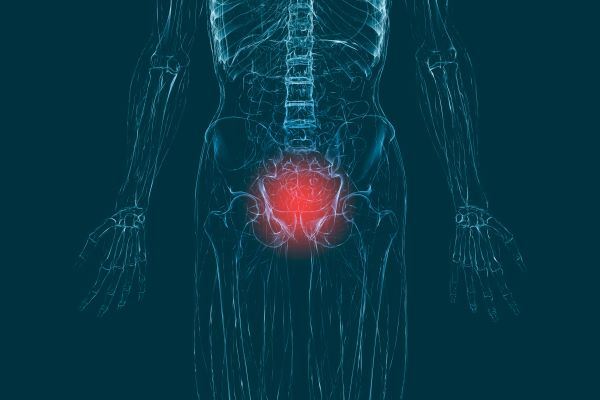
Pubalgia is a pain felt in the groin region most commonly caused by an inflammation in the insertion area of the abdominal muscles, on the upper edge of the pubis or adductor muscles, on the lower edge of the pubis.
Pubalgia is found in people who do sports and is caused by the type of sports activity, the surface on which it takes place, as well as by the shoes worn by the athlete.
For example, tennis players who often change the playing surface (slag, grass) may suffer from pubalgia because changing the pitch requires a readjustment of the muscles and stability, readjustment that is often not done in the best way due to the intensity and frequency of the matches played.
Besides tennis, pubalgia can be found in other sports that take place with accelerations, decelerations and sudden changes of directions, such as football, athletics, skiing but also in activities where it requires good stability thus forcing the lower abdominal muscles and/or the adductor muscles that stabilize the thighs towards the center of the body.
There are also genetic factors that can lead to pubalgia, such as, for example, the hypotonic abdominal wall (poorly toned).
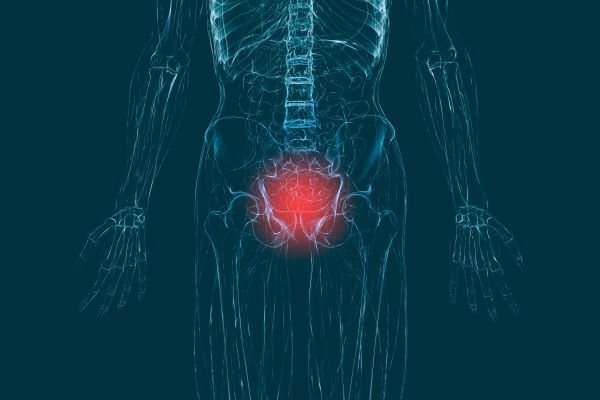
The main symptom of pubalgia is sharp pain felt in the groin area.
The pain can disappear with rest but most of the time it comes back when the movement resumes. Also, the pain could be felt when coughing or sneezing.
In addition to pain, stiffness or tenderness may also occur in the groin area.
It is important to differentiate between pubalgia and inguinal hernia because both diseases manifest with pain and discomfort felt in the groin area.
Pubalgia refers to inflammation, straining or rupture of soft tissue in the groin area.
A hernia occurs when an organ pushes through a weak point into the muscle or tissue around it, near the groin area. Inguinal hernia, which manifests with several swollen areas in the groin region, can cause serious complications and is treated only surgically.
In the acute phase that manifests with intense pain, the following are recommended:
➢ To interrupt sports activity as well as the movements that cause or accentuate the pain
➢ To apply ice locally for 10 minutes, three times a day. The ice will be wrapped in a thin towel so as not to irritate the skin.
➢ Drug treatment with analgesics, anti-inflammatories and myorelaxants, indicated by the doctor.
➢ Restriction of sexual intercourse
After the pain is alleviated, a recovery program is started which, in the first stage, will aim at:
➢ increasing flexibility
➢ toning the adductor muscles
➢ stretching of the lower abdominal muscles and of the lower back muscles.
In a second stage of the recovery program it is recommended to progressively increase the intensity of the exercises and then gradually perform exercises on the sports field - from easy running to more intense movements.
Tenotomy (tendon cutting) adductors can be done percutaneously with a small incision.
Another surgical procedure is laparoscopy which consists of inserting a thin tube (laparascope) with a small video camera in the groin area to give the surgeon a better view of the damaged tissue. Small instruments can be inserted through another nearby tube to perform the operation itself.
Once the tissues have healed, regardless of the type of surgery, a progressive recovery program is started, which aims at toning and stretching the adductor muscles.
The recovery period in mild cases can be of 3-4 weeks, and in more severe cases it can even reach 1 year. It is important to go to the specialist immediately at the onset of symptoms in order to prevent greater damage to the tendons of the lower abdominal muscles or adductors in relation to their area of insertion in the pubic area.
➢ Pubalgia can be prevented by progressively adapting to the playing surface and by wearing shoes specific to the practiced sport.
➢ Proper physical training and observing the time required for rest reduce the risks of pubalgia
➢ Acceleration movements, deceleration and sudden changes of direction will be resumed progressively after a pubalgia
➢ Warm-up and cooling down before and after training are essential.

I always follow professional workflow and provide you the best service with reliable costs.



De Quervain tenosynovitis or tendonitis is a painful inflammation of the tendons of the thumb, named ...
Bursitis occurs when the bursae that are small liquid sacs with the role of cushioning and lubricating the areas ...
Abdomenul aton (fara tonus muscular) sau abdomenul proeminent este caracterizat printr-o slaba dezvoltare a musculaturii abdominale ...