

2023-03-27 00:00:00
FLAT FOOT
The flat foot is a condition in which the arch, located along the inner part of the foot, is flattened, which allows ...


The shoulder is composed of several joints, tendons and muscles that come together to allow for a wide range of movement. But because of so many of the different structures that make it up, the shoulder is particularly vulnerable to a number of problems. Injuries of the rotator cuff are the most common causes that cause pain in the shoulder.
The rotator cuff is a tendinous blade that covers the anterior, upper, and posterior sides of the shoulder joint capsule. It is composed of the tendons of 4 different muscles, namely:
1. supraspinatus muscle
2. infraspinatus muscle
3. small round muscle
4. subscapularis muscle
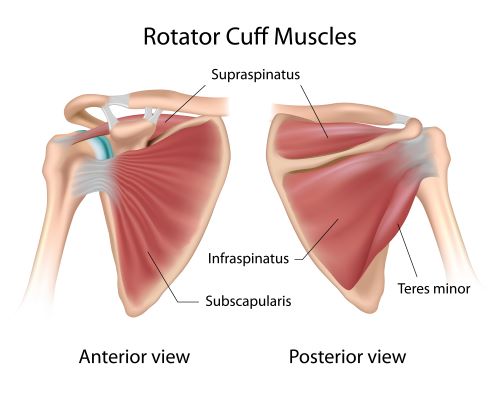
By the action of the rotator cuff, the humeral head is maintained in the shoulder joint and ensures the rotational and lifting movements of the arm.
The dysfunctionality of the rotator cuff allows the superior migration of the humeral head and the tendons of the muscles that make up the rotator cuff can break if they are overworked or injured.
The ruptures of the rotator cu muscles seriously affect the functionality of the shoulder, manifesting with intense pain and disability in the shoulder and arm.
They are more common after the age of 65 and can occur either on a degenerative or traumatic background.
1. Degenerative ruptures of the rotator cuff muscles occur after many years of micro-rupture of muscle fibers.
2. Traumatic ruptures are more sudden and occur after a fall on the shoulder, arm, or hand. After a traumatic rupture of the muscles, the arm cannot be raised more than 90 degrees.
Of the four muscles of the rotator cuff, the most exposed to injuries and rupture is the supraspinous muscle, which makes the abduction movement (lateral lifting) of the arm.
The supraspinous muscle has its origin in the supraspinous fossa of the shoulder blade and is inserted through a tendon on the large tubercle of the humerus (arm bone).
A rupture of the rotator cuff most commonly refers to the rupture of the tendon of the supraspinous muscle
Ruptures of the supraspinous tendon are usually classified as follows:
1. Rupture of the tendon, which usually occurs along the tip of the tendon
2. Partial rupture of the tendon width
3. Complete rupture of the tendon width
4. Complete rupture, when the tendon is divided into two
5. Withdrawal of the tendon, when one side of the torn tendon migrates to the shoulder.
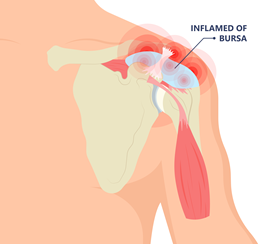
Quite frequently, subacromial bursitis is associated with a rupture of the rotator cuff.
The bursa, a bag of liquid with the role of lubrication, which is located between the rotators cuff and the acromion bone (bone that comes as extension of the shoulder blade) allows the tendons of the muscles to move freely with the movement of the arm. When the tendons are damaged or injured, the bursa will become inflamed and painful, turning into subacromial bursitis.
Sports or routine activities that cause or aggravate the pain, will be interrupted for a period of time. The most problematic sports for the shoulder are golf, those that use the racket (tennis, squash), as well as weightlifting.
Initially, the tendon will be examined to determine if it’s completely broken and what is the most appropriate therapeutic approach. If surgery is not necessary, the recovery program will begin through physical therapy (specific physical exercises, both stretching and toning exercises) that aim at:
➢ increasing joint mobility
➢ reducing inflammation
➢ increasing joint stability
➢ improving circulation
➢ prevention of shoulder stiffness
The recovery program will include stretching exercises and active exercises that will help both increase flexibility and increase muscle tone. A better muscle tone will reduce pain and prevent the appearance of other injuries.
Avoid activities or exercises that cause pain in the shoulders, such as raising the arm over the head, but also sleeping on the affected side.
Nonsteroidal anti-inflammatory drugs have beneficial effects for reducing pain and inflammation, but are recommended for short periods of time, 7-14 days maximum. In situations where the pain persists, local cortisone injections are used, cortisone being an extremely effective anti-inflammatory. These injections help reduce inflammation and implicitly pain, but not to restore the ruptured tendon.
It is especially indicated if the pain is very intense and the shoulder is very weakened.
After surgery, it is recommended to begin with the physical therapy program, which can last on average 6-9 months.
Following surgery there is also a small risk of developing frozen shoulder (retractile capsulitis).
➢ Avoid falls on the outstretched arm or lifting a large weight using a sudden movement
➢ Repetitive movements in some sports, such as: rowing, tennis or weightlifting, can tense the tendons and muscles of the rotator cuff predisposing them in time to the risk of breaking
➢ Vascularization of the shoulder joint decreases with age and it is necessary to activate it through physical exercises. A good vascularization helps with the recovery of the damaged tendon
➢ As time passes there is a risk of developing bone spurs on the lower part of the shoulder joint. When lifting the arm these bony spurs will rub against the muscles of the rotator cuff, weakening them and predisposing them to rupture.
➢ Carpenters, painters and those who use the arm above the head, are more likely to affect the muscles of the rotator cuff. Golfers can also suffer from this condition.

I always follow professional workflow and provide you the best service with reliable costs.



The flat foot is a condition in which the arch, located along the inner part of the foot, is flattened, which allows ...
The Raynaud’s phenomenon causes some areas of the body, such as the fingers and toes, to feel numb and ...
Torticollis is a painful condition of the neck muscles (sternocleidomastoid muscle) in which the head and neck are ...