

2023-03-13 00:00:00
MUSCULAR DYSTROPHY
Muscular dystrophy is part of a group of genetic disorders that cause the progressive degeneration of muscle fibers ...


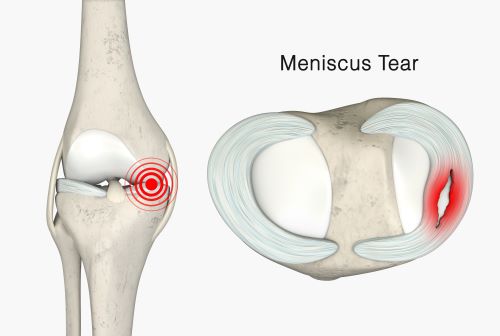
Meniscus rupture is one of the most common knee injuries. Any action or activity that involves twisting or rotating the knee, especially when it supports body weight, can lead to rupture of the meniscus.
Other actions that can result in the rupture of the meniscus are the sudden stopping with aggressive pivoting, kneeling for lifting a heavy object.
Most of the time, the meniscus breaks on the sports field, either the lateral or the medial meniscus, rarely both at once.
In older people, the meniscus may rupture as a result of degenerative changes in the knee. In this case, a fairly low force such as light jogging or stepping down a curb can produce a meniscus rupture.
At the level of each knee there are 2 meniscuses (medial or internal and lateral or external), which are actually pieces of cartilage in the shape of the letter C which act as a pillow between the thigh and the tibia.
Meniscus rupture manifests with:
➢ intense pain
➢ stiffness
➢ tumefaction (swelling of the knee)
➢ instability and difficulty when putting weight on the affected leg.
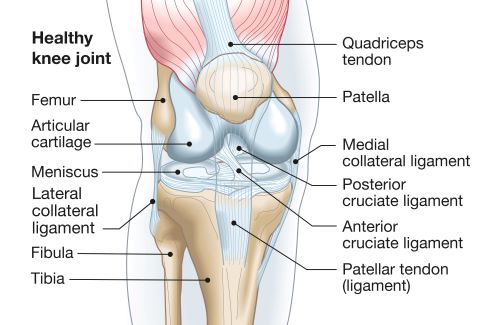
The knee is one of the largest and most complex joints of the body, having a complex functionality. The knee joint must be mobile and flexible, to allow flexion and extension of the lower limb and also stable to support the entire weight of the body.
Walking, running and accelerating suddenly, jumping, twisting on the heels, braking, stopping, more or less sudden are roles of the knee that generate numerous pressures, managed by the bone, ligamentous, meniscal and muscular structures of the knee.
keep the muscles and bones of the knee connected to allow the knee joint to move.
join with all the bones of the knee giving stability to the knee. The anterior cruciate ligament is the one that prevents the femur from sliding backwards along the tibia, the posterior cruciate ligament prevents the femur from sliding forward along the tibia and the collateral ligaments, lateral and medial, prevent the femur from sliding from side to side.
lateral and medial, act as pillows absorbing the shocks, thus protecting the underlying cartilage.
In case of severe trauma, meniscus rupture can also be associated with the rupture of the anterior cruciate ligament or of the medial collateral ligament.
There are several types of meniscus rupture, among which we mention the longitudinal, oblique, vertical, horizontal rupture.
Locally applied ice, in sessions of 5-10 minutes 3-5 times/day, helps reduce pain and swelling of the knee. Always put a thin towel between the ice and the area on which it is applied.
Anti-inflammatory drugs are indicated to reduce pain and inflammation, but for periods of time not exceeding 2 weeks.
Resting and avoiding loading of the affected lower limb are important.
Reduce activities that further aggravate the pain in the knee and especially the activities that involve twisting the knee.
In order to reduce the pressure and loading the affected knee, you can opt for walking with the help of crutches and the knee will be protected with the help of an orthotics.
As the inflammation reduces, after 2-6 weeks, light charging of the knee can begin.
Special exercise programs contribute to the toning of the muscles around the knee, providing stability and support to the joint.
Improving the tonus of the stabilizing muscles of the knee is important for reducing additional pressure on the meniscus.
The most important function to be recovered is the flexion of the knee. Endurance and balance are other functions that must be recovered through physical therapy.
Of all procedures, electrotherapy is especially helpful in relieving pain and inflammation.
It is an option in case of serious ruptures.
After surgery, begin the recovery program through physical therapy.
Remember that the healing following a meniscus rupture is lasting, up to 1 year, one of the reasons being the poor vascularization of the knee.
✓ Resumption of activities is done gradually, with the slight increase of their intensity
✓ Participation in recreational sports is done by wearing protective equipment (orthosis)
✓ Attention to sports such as football, basketball or tennis, which most frequently predispose to the rupture of the meniscus.
✓ Personalized shoe pads help to equally distribute the forces around the knee, if there is a biomechanical problem of the foot
✓ Avoid deep squatting
✓ Manage intense activities correctly. For example, instead of carrying a large weight at once, divide the weight in two and carry it one at a time.

I always follow professional workflow and provide you the best service with reliable costs.



Muscular dystrophy is part of a group of genetic disorders that cause the progressive degeneration of muscle fibers ...
Osteoporosis causes the bones to become weak and fragile, so a fall or even mild stress, such as a bend or even ...
Morton’s neuroma is a painful condition that affects the flat part of the foot, at the level of the metatarsus, usually ...