

2023-03-29 00:00:00
CERVICAL SPONDYLOSIS
Cervical pain occurs more often than we imagine. A lot of factors can cause cervical pain, but this is ...


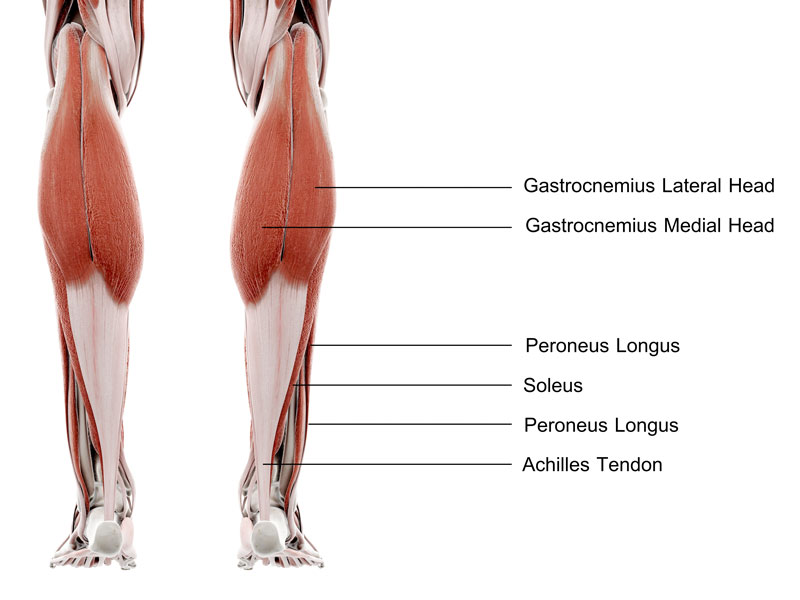
The Achilles tendon is a structure of fibrous tissue that connects the calf muscles to the heel bone (calcaneus) – basically, it connects the calf muscles (gastrocnemius and soleus) and the calcaneus. It is the thickest, strongest and most resistant tendon in the body, allowing us to step on the tips while walking, running or jumping, practically performing the plantar flexion of the foot.
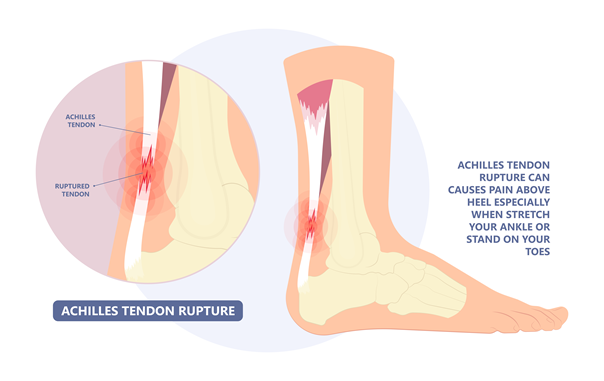
The Achilles tendon may suffer complete or partial ruptures. When the tendon is partially broken it is still connected to the calf muscles and when it is completely broken, there is no connection between the calf muscles and the calcaneus.
The Achilles tendon can rupture when there is a stress or a great force applied to it (during sports activities such as football, basketball, tennis or running).
More precisely, it can break at a strong push in the leg or during a jump or at the beginning of a sprint, with the knee stretched out.
Also, the Achilles tendon may suffer ruptures during a slip when the foot is taken forward for balancing or during a fall from a significant height.
Another cause, less common, is the deep cutting of the tendon, during a car accident for example.
The Achilles tendon usually ruptures at a distance of 2-6 cm above the heel (heel bone), the diagnosis being established by a doctor after performing a musculoskeletal ultrasound.
The possible movements in the foot, as well as other existing injuries, will also be examined.
When the Achilles tendon suffers a rupture, it manifests with sharp pain in the tendon, the inability to stand on the tips or push into the ground, as well as limping while walking.
The main objective of the treatment is to restore the length, tension of the tendon and restore the motor function to normal parameters. The treatment aims at two important aspects:
1. the protection necessary to heal and prevent relapses
2. early immobilization, necessary to prevent inflammation and muscle atrophy.
In the case of a total tendon rupture, regardless of whether one went through surgery or not, a period of immobilization of 6-8 weeks in plaster or orthosis is required. But during the period of immobilization, manual therapy is recommended to reduce inflammation and improve the mobility of the ankle and foot.
It is especially indicated for performance athletes or people who perform intense physical activities, people who have been diagnosed late with Achilles tendon rupture or have a relapse and consists in restoring the two parts of the tendon. After the intervention, the Achilles tendon will be protected with the help of a plaster splint, orthotics or special boots.
It involves a lot of rest to allow the tendon to heal.
The stages of conservative treatment are:
For 8 weeks, with the foot facing down, to avoid stress on the tendon during the healing period.
➢ locally applied ice and ice massage help reduce inflammation and pain
➢ elevation (lifting) of the foot on a support, above the level of the heart, also helps reduce inflammation
➢ using a compressive bandage
➢ using a support in shoes, at the level of the heel
They are crucial in the recovery stage, after removing the gypsum, aiming at:
➢ reducing inflammation
➢ improving foot and ankle mobility
➢ regaining muscle strength
➢ preventing relapses

I always follow professional workflow and provide you the best service with reliable costs.



Cervical pain occurs more often than we imagine. A lot of factors can cause cervical pain, but this is ...
Fracture of the wrist involves the rupture of one of the bones of the hand or even of the wrist itself. Most commonly ...
Of all the forms of arthritis that affect the knee, two forms are more common, osteoarthritis and rheumatoid arthritis ...