

2023-03-07 00:00:00
WHY DO CALVES HURT?
The calf is the part of the foot located between the knees and the foot. The skeleton of the calf consists of two bones ...


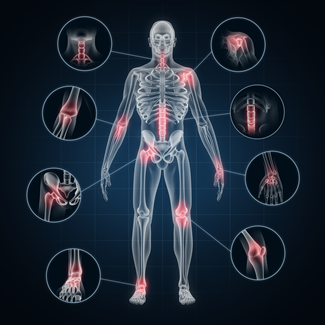
We use our joints every moment for simple things, such as dressing, walking, eating, communicating etc. A joint represents the totality of the elements that participate in the union of two or more neighboring bones, in the adult body there are 206 bones and 360 joints.
Not all habits in our daily activities are to the liking of the joints, some of them affecting them directly, more precisely:
Not all habits in our daily activities are to the liking of the joints, some of them affecting them directly, more precisely:
The problem is not just the deficient posture, but also maintaining it for long periods of time. The direct consequences are the overloading of the muscles and also the pressure on the intervertebral discs.
Excessive use of the thumb for TYPING, affects its tendons and can irritate and block the thumb in a curved position. Looking down at the phone causes pain in the neck and shoulders. Bending the neck so much that the chin almost touches the chest, excessively increases the degree of load of the neck (as if the neck has to support the weight of 5 heads instead of just one).
Worn shoes do not support the feet and ankles well enough, predisposing to injury. When practicing a sport it is important to choose the right pair of shoes, depending on the practiced sport. For example, high sneakers for basketball can protect the ankles from sprains but are not suitable for practicing sports other than basketball. If inside the shoes there is too much support for the plantar arch (the hollow on the internal side of the foot), it will prevent the foot from moving naturally. Heels, the higher they are, the more they affect the knees. The thigh muscles need to work harder to keep the knee straight, which can cause pain. Worn daily, shoes with high heels significantly increase the chances for osteoarthritis
Extra kilograms add extra weight to the joints and increase the risk of painful arthritis as well as other joint/muscle injuries. For example, each extra kilogram adds an additional weight of 3-4 kilograms on the knees. Overweight also triggers inflammation, which can cause all joints to become stiff, painful and swollen. Even a slight weight loss of 5-10% of body weight will have a significant beneficial impact on the joints.
Whether it is a purse, backpack or bag, too much weight can cause pain in the neck and shoulders. The large weight carried on one shoulder will overload the muscles and joints on the side of that shoulder and will also affect balance. Too much weight placed on small muscle groups (at the gym or in daily activities) also affects the joints.
When something heavy needs to be lifted from the floor, the knees will bend and push upwards with the strong muscles of the legs.
The quantitative lack of sleep or quality sleep can accentuate joint pain, when there is already a joint disorder.
One theory says that lack of sleep can trigger inflammation in the body, which can also lead, in time, to damage of the joints.
Regarding the position of the body during sleep, sleeping on the belly is not too beneficial because it pushes the head back (in slight hyperextension) and can compress the cervical vertebras. In the case of sleep on the back, the head may be slightly tilted forward, which puts pressure on the muscles and joints of the cervical spine. A good position for sleep is on one side with a pillow between the knees.
The quality of the mattress is also important, a mattress with a medium degree of rigidity being optimum.
Regular stretching significantly helps increase the flexibility of muscles, tendons and joints. This allows the joints to move more easily and helps the muscles around them to function better, which is the key to healthy and stable joints
After the age of 30, the bones begin to become thinner and more at risk of breaking. If we tone the muscle mass, we also slow down the bone loss, and, moreover, we accelerate the regeneration of bones (annually, 5-10% of the bone tissue of an adult regenerates).
Strength exercises (with weights), resistance exercises and balance exercises are the most effective for both muscles and bones. Thus, strength training helps to strengthen muscles and bones. Resistance exercises such as running, climbing stairs, jumping ropes, skiing - strengthen the bones of the legs, hips and lumbar spine. So, not only will the muscles be stronger, but also the bones will be denser and together, the muscles and strong bones stabilize the joints.
If we quit smoking, the joints will thank us. Nicotine and tobacco slow down blood flow to the bones and to the cushioning discs between the vertebrae. It also limits the absorption of calcium necessary for bones. Even more, smoking can prevent the secretion of estrogen, a hormone necessary for bone health and can also prevent the process of bone regeneration. All this makes the joints weaker and more exposed to injuries.
Our body is with our best friend when we work with it and not against it. When we do not pay attention to posture and "collapse" on a chair, muscles and joints are under stress. So, keeping your back straight, your shoulders pulled back and keeping your gaze forward are essential for a correct posture
When we run, pedal or even type, we use the same repetitive movements. The problem arises when the physical condition is not in the best shape, and repetitive movements overload the muscles and put too much pressure on the joints. In conclusion, we must train all our muscle groups and all the joints.

I always follow professional workflow and provide you the best service with reliable costs.



The calf is the part of the foot located between the knees and the foot. The skeleton of the calf consists of two bones ...
The waist-balance ratio refers to the ratio between the size of the waist circumference and that of the hips ...
Although pregnancy seems like the perfect time for "laziness", fatigue can be felt more than usual and the back may ...