


2023-03-14 00:00:00
JOINT COMPLICATIONS CAUSED BY DIABETES MELLITUS
Diabetes mellitus is a chronic condition that affects the way the body uses blood sugar (glucose). Glucose is essential ...


The body mass index (BMI) is a statistical indicator of a person's weight relative to his/her height. Basically, it is a measure that indicates if a person has a healthy weight for his/her height, no matter the shape of the body because the optimal weight is calculated for that body.
BMI is calculated by dividing the weight, expressed in kilograms by the square height, expressed in meters. Formula: Weight(kg)/[Height(m)]2
Although it is a useful indicator for most people, BMI however does not work for everyone, more precisely it does not fit children or elderly people, being indicated for age categories between 18-65 years. It is also not very relevant for people who do sports and have a developed muscle mass, because the muscles weigh more compared to adipose tissue and in this situation the BMI will be higher. For example, rugby players have a BMI that indicates obesity, even if they do not have excess body fat.
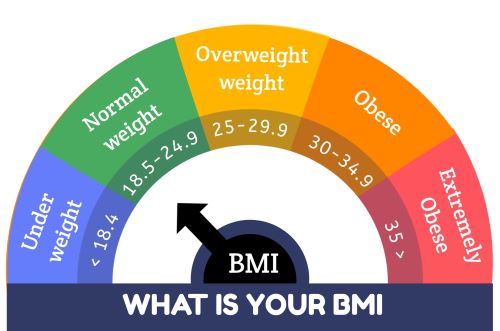
| VALOARE IMC | RISCURI PENTRU SANATATE |
|---|---|
| Sub 18,5 | Risc pentru sanantate ridicat in sensul ca, greutatea este mult prea mica pentru o sanatate optima |
| 18,5-24,9 | Risc pentru sannatate scazut, minim |
| 25 – 29, 9 | Risc moderat pentru sanatate |
| 30-34,9 | Risc pentru sanatate ridicat. Este un avertisment, fiind necesara schimbarea dietei |
| >35 | Risc pentru sanatate foarte ridicat. In acesta situatie greutatea afecteaza semnificativ starea de sanatate si trebuie eliminat surplusul de grasime. |
➢ age
➢ physical condition
➢ family or personal history
➢ profession
➢ nutrition
Body weight and health are interdependent. Health can influence, beneficially or not, the body weight and vice versa, any decrease or increase in body weight can influence, for better or for worse, the state of health. Therefore, maintaining a normal body weight is one of the most important ways to maintain health, to avoid the risk of getting sick.
The risks related to overweight, and obesity are multiple, affecting all the body's systems. A BMI > 30 exponentially increases the risk of complications and associated pathologies, the most serious of which are diabetes mellitus and cardiovascular diseases. A weight loss, even of 5-10%, can considerably reduce the risk of developing obesity-related conditions.
The initial goal of a weight loss regimen, in case of an increased BMI, should be to reduce body weight by approximately 10% from the moment of the initial measurement. Weight loss should be constant with the help of a low-calories diet and exercise
To ensure a healthy weight loss, it is important for a person:
➢ to change their lifestyle;
➢ to establish a food program to reduce the calorie intake from food and to control the schedule and portions of food at each meal.
Sports and daily exercise, along with diet, can help lose weight and maintain a desired weight for a long time.
It is recommended to maintain an active lifestyle, which includes about 30-45 minutes per day of moderate intensity physical activity such as fast-paced walking and other physical exercises. In addition, exercises to tone muscle mass are also recommended, at least twice a week.
Consulting a physical therapist for drawing up an exercise program, adapted to individual needs, is important because often there are associated various deficiencies, such as a poor posture.
Physical activity should be part of the weight loss regime and the weight control program, and the default of the BMI, because:
➢ it can contribute to weight loss in overweight and obese adults;
➢ it may reduce abdominal fat;
➢ it may increase the functioning capacity of the cardiorespiratory apparatus;
➢ it can help maintain kilograms after weight loss.
The Body Mass Index is a verified and effective formula for weight measurement and rapid evaluation of the associated health risks in adults.
If a person registers abnormal BMI values, it is advisable to consult a specialist to establish an appropriate solution to remedy the state of health.
If you do not face health problems and the value of BMI is in normal parameters, protect your health by following a balanced lifestyle and diet.

I always follow professional workflow and provide you the best service with reliable costs.



Diabetes mellitus is a chronic condition that affects the way the body uses blood sugar (glucose). Glucose is essential ...
Breathing is a physiological process by which organisms make an exchange of oxygen and carbon dioxide with ...
Winter sports, skiing or snowboard, can become dangerous if the body is not properly prepared or trained or if ...