


2023-03-13 00:00:00
WHY DO OUR HANDS HURT?
The anatomy of the hand is complex, its integrity being absolutely essential for daily functioning. The hand consists of ...


The knee is one of the largest and most complex joints of the body, having a complex functionality. The knee joint must be mobile and flexible to allow flexion and extension of the lower limb and also stable to support the entire weight of the body. Walking, running and accelerating suddenly, jumping, twisting on the heel, braking, stopping more or less suddenly, are roles of the knee, which generate numerous pressures, managed by the bone, ligament, meniscal and muscular structures of the knee .
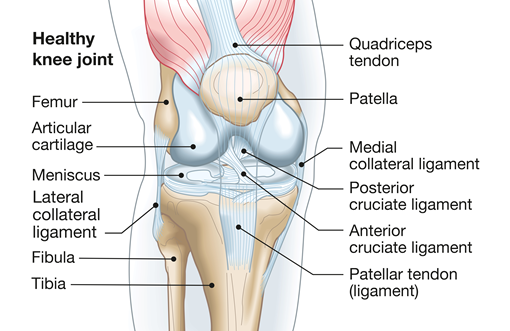
When knee pain occurs, most often due to overstrain of the joint, one of the bone, ligamentous, meniscal or muscular structures are involved. Thus, knee pain occurs in case of:
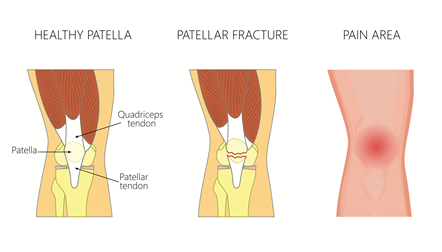
If the knee hurts very much after a fall, there may be a fracture of one of the component bones of the knee joint, namely the femur, the kneecap and the tibia. In this case it is absolutely necessary to go to the physician.
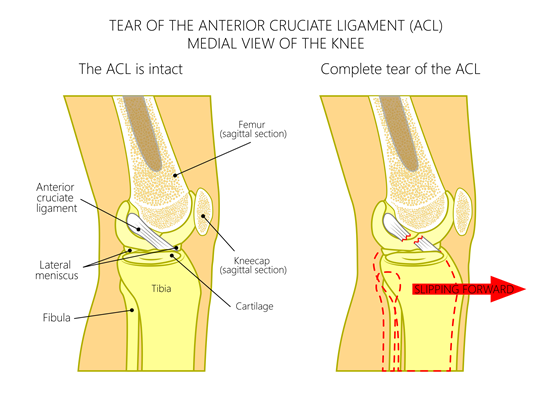
If you can't move because of pain after a sudden change of direction, often during the game of football or basketball, you may have torn the anterior crossed ligament, the ligament that connects the femur and tibia and that prevents the tibia from moving forward. As manifestations, the knee will swell and become unstable.
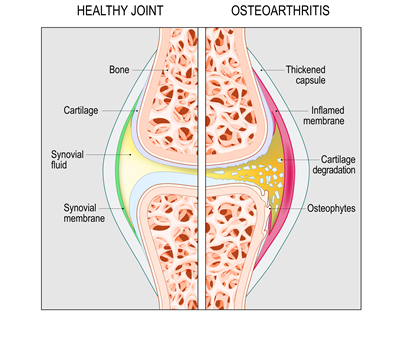
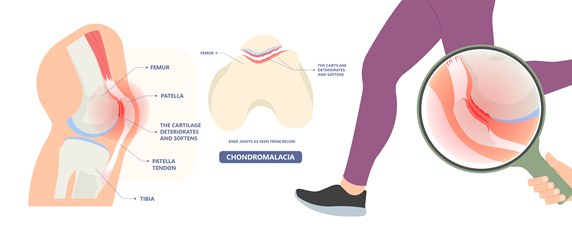
If you find it difficult to bend and straighten your knees (squat movement), it may be osteoarthritis. In this case, the knee may feel stiff, inflamed and painful due to cartilage wear and tear, which covers the bone surfaces preventing the bones from rubbing against each other. It is usually more common in people over 65 years of age. In young people, osteoarthritis can develop after an injury.
It is a autoimmune disease, in which the immune system, which normally defends the body, in this situation, can attack the knees. For example, rheumatoid arthritis tends to affect both the hands and other paired joints on both sides of the body. Lupus affects some joints, muscles and other organs in the body. Psoriatic arthritis often causes thick, discolored skin spots associated with joint pain
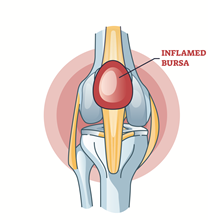
When the bursa becomes inflamed. The bursa is a bag full of fluid that acts as a pillow between a hard tissue (bone/tendon) and a soft tissue (skin). As manifestations, redness, swelling, sensitivity to touch and pain present when resting appear. Bursitis is favored by prolonged sitting on the knees.
It is one of the most common types of overuse injuries encountered in runners. The iliotibial band, which is a fascial structure of the fibrous tissue, present along the outer part of the foot, becomes inflamed. The iliotibial band starts at the level of the pelvis and stretches to the outer area of the knee joint. The band works together with a few muscles of the thigh to provide stability to the outer part of the knee. When the iliotibial band does not work properly, running can become painful and it is necessary to interrupt it. The pain is usually present on the side of the knee and sometimes it can also irradiate in its anterior part.
It is one of the most common knee injuries . Any action or activity that involves twisting or rotating the knee especially when it supports body weight, can lead to rupture of the meniscus. Other actions that can result in the rupture of the meniscus are the sudden stopping with aggressive pivoting, kneeling for lifting a heavy object. Most of the time the meniscus breaks on the sports field, either the lateral or the medial meniscus, rarely both at once. Meniscuses, lateral and medial, act as cushions absorbing shocks, thus protecting the underlying cartilage.
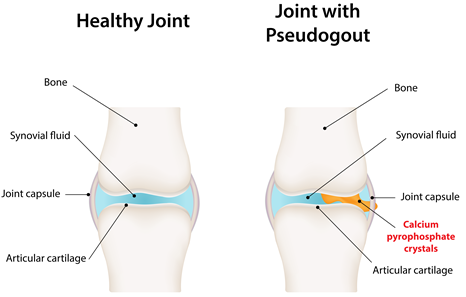
It is a form of arthritis, caused by crystal deposits in and around the joints and is characterized by sudden, painful swelling of one or more joints. These episodes can last for days or weeks. The most commonly affected is the knee. Also called calcium pyrophosphate deposits disease, the term "pseudogout" was invented because the manifestations are similar to those of gout. Both conditions are caused by crystal deposits within a joint, but the type of crystal differs.
Problems of other parts/joints of the lower limb can also cause pain in the knee.
Go see a doctor!
A correct diagnosis involves X-rays, blood samples, as well as some joint tests.
Treatment may include medications, special exercises, wearing orthotics, or, in some cases, surgery.
There are some general tips and guidance that can be observed, regardless of the cause of the pain:
1. Losing weight could help reduce the pressure on the knees.
2. Rest, always helps recovery.
3. Ice applied topically, in sessions of 5-10 minutes, 3-5 times a day, significantly helps reduce pain and inflammation. Always put a towel between the ice and the area on which it is applied.
4. The elevation (lifting) of the foot on a pillow or support, higher than the level of the heart, helps to withdraw the swelling from the knee.
5. Compression, with the help of an elastic bandage, wrapped around the knee, helps both to support the joint and to prevent/to stop the accumulation of fluid at its level.

I always follow professional workflow and provide you the best service with reliable costs.



The anatomy of the hand is complex, its integrity being absolutely essential for daily functioning. The hand consists of ...
The lateral collateral ligament (LCL), also called the fibular ligament, is the main structure located on the external ...
Medial epicondylitis or the golf player's elbow is a condition that causes pain in the tendons of the forearm muscles that ...