


2023-03-14 00:00:00
FRACTURE OF THE ELBOW (OLECRANON)
When we bend the elbow, it is quite easy to feel/touch the olecranon. It’s a bone protrusion located at the tip of the ...


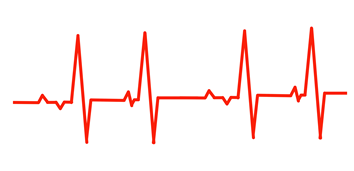
The maximum heart rate is defined as the highest number of beats per minute that the heart can pump under maximum stress.
The factors that influence the heart rate are age, intensity of daily effort, emotions but also the health of the heart and medication, if any. Stress, mental state, diet, nicotine and caffeine consumption, thyroid hormones, oxygen levels, calcium, potassium, sodium, as well as the environment, are other factors that can influence the maximum heart rate.
To train more efficiently.
In the case of a training based on heart rate (cardio training), knowing the maximum heart rate allows training at the right intensity to achieve goals. Basically, a heart rate workout is better/smarter than a hard workout.
The intensity of the training will be divided into five ranges of heart rate, from very light intensity to maximum intensity, the five ranges being calculated as a percentage of the maximum heart rate.
To determine the personal ranges of the heart rate, initially the maximum heart rate should be calculated or estimated. For example, in the third range of the heart rate, we will train at a level of 71-80% of the maximum heart rate. In this area the training level is easy to medium, but it also results in improved blood circulation.
In the fourth ranges of the heart rate, we train at 81-90% of the maximum heart rate, going towards increasing the maximum performance capacity.
The most accurate way of determining the maximum heart rate is to perform an effort test, more precisely the tested person is subjected to controlled physiological stress, such as running on a treadmill while being monitored with the help of an EKG (electrocardiograph). Thus, the intensity of effort will be periodically increased until certain changes in cardiac function are detected on the EKG monitor, at which point the effort test will stop. The duration of the exercise test varies 10-20 minutes.
Various formulas are also used for calculating the maximum heart rate, determined by studies and meta-analyses, but the most often used formula is
The recovery of the heart rate represents the decreasing of the maximum heart rate (measured during the peak period of the effort) and its value measured after a period of rest, the period with a fixed duration.
Heart rate that does not decrease by more than 12 bpm, one minute after stopping effort, is associated with high risks.
A greater reduction in heart rate after effort, during the rest period, is associated with a high level of heart fitness.
It is possible to exceed the upper limit of the maximum heart rate if there is no coronary artery disease or a possible risk of heart attack, but the consequences are, however, injuries or pain in the muscles or joints.
For at least 15-20 minutes of training, ideally 35-45 minutes. For beginners, training should be started at a heart rate of 60-70% of the maximum heart rate, the intensity being increased along the way.
The heart rate that burns the most adipose tissue is 70 -80% of the maximum heart rate.
For a person who does not do performance sports, the heart rate requires a visit to the doctor when it is constantly higher than 100 beats/minute or under 60 beats/minute.
Sedentary people, should work at about 57% - 67% of the maximum heart rate
People with minimal activity, should work at 64% - 74% of the maximum cardiac rate
People with sporadic physical activity, should work at 74% - 84% of the maximum cardiac rate
People who exercise regularly, should work at 80% - 91% of the maximum heart rate
People who constantly do sports at high intensities, should work at 84% - 94% of the maximum heart rate.
➢ For details regarding heart rate variations talk to a doctor/physical therapist/sports coach
➢ Certain medications, especially those for hypertension, can reduce the maximum heart rate and thus decrease the targeted range for heart rate. Talk to your doctor in this case.
➢ At the beginning of training, especially if there is not a very good physical condition, low intensity exercises (50%) are recommended, which will gradually increase. Usually, after 6 months of training a person can reach high intensity (85%).
➢ A traditional way to test if the intensity is right, is the following: if you can't have a conversation, if you can't talk while training, it means that the intensity is too high.
➢ If you have heart disease, talk to your doctor about the physical exercises you can perform without affecting your health.
➢ If you suffer from certain diseases, you are overweight, past 40 years of age or you have had a sedentary lifestyle, it is recommended to consult your doctor before starting a training program.

I always follow professional workflow and provide you the best service with reliable costs.



When we bend the elbow, it is quite easy to feel/touch the olecranon. It’s a bone protrusion located at the tip of the ...
Arthroscopy is the procedure that orthopaedic surgeons use to inspect, diagnose and repair problems inside a joint ...
Lombago is a condition that manifests with pain in the muscles and joints of the lower back, more precisely in the ...