


2023-03-14 00:00:00
GOUT AND PSEUDOGOUT
GOUT is a type of arthritis that causes a sudden pain, a burning sensation, swelling of the joint and stiffness ...


Multiple sclerosis (MS) is a potentially debilitating condition of the brain and spinal cord (central nervous system).
In MS, the immune system attacks the protective sheath (myelin) that covers the nerve fibers and causes communication problems between the brain and the rest of the body. Finally, the disease can cause permanent damage to the central nervous system or damage to the nerves.
The signs and symptoms of MS vary greatly and depend on the percentage of nerve damage and how affected nerves are. Some people with severe MS may lose the ability to walk independently, while others may experience long periods of remission (disappearance of signs and symptoms) without new symptoms.
The signs and symptoms of multiple sclerosis can differ greatly from person to person and throughout the course of the disease, depending on the location of the affected nerve fibers. The symptoms that affect movement, are:
➢ Numbness or weakness that usually occurs on one side of the body
➢ Electrical shock sensations that occur at certain movements of the neck, especially when bending the neck forward
➢ Tremor, lack of coordination or unstable gait
There are also vision problems:
➢ Partial or complete loss of vision, usually in one eye, often with pain during eye movement
➢ Prolonged double vision
➢ Blurred vision
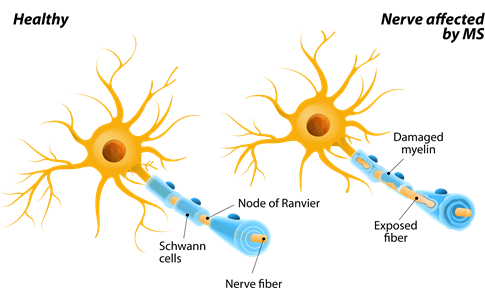
The cause of multiple sclerosis is not known. It is considered an autoimmune disease in which the body's immune system attacks its own tissues. In the case of MS, this problem of the immune system destroys myelin (the sheath that covers and protects the nerve fibers in the brain and spinal cord). When the protective myelin is damaged and the nerve fiber is exposed, the messages traveling along the nerve fiber can be slowed down or blocked.
A combination of genetic factors and environmental factors can also contribute to the emergence and evolution of MS.
In most people with MS, the disease has a relapsing-remission evolution (returns-stops). There are periods of new symptoms or old symptoms that recur, that develop over several days or weeks, and usually improve partially or completely. These relapses are followed by quiet periods, remission of the disease that can last for months or even years.
Small increases in body temperature can temporarily worsen the signs and symptoms of MS, but they are not considered real relapses of the disease.
At least 50% of people with recurrent-remission MS eventually develop a constant progression of symptoms, with or without periods of remission, within 10 to 20 years from the onset of the disease. This is known as secondary-progressive MS.
Worsening of symptoms usually includes problems with mobility and walking. Some people with MS, experience a gradual onset and constant progression of signs and symptoms, without any relapse, known as primary-progressive MS.
➢ Age
MS can occur at any age, but the onset usually occurs between 20 and 40 years of age.
➢ Gender
Women are 2-3 times more exposed than men to develop relapsing-remission MS.
➢ Heredity
If one of the parents or siblings had MS, there is a higher risk of developing the disease.
➢ Certain infections
A variety of viruses have been linked to MS, including Epstein-Barr, the virus that causes infectious mononucleosis.
➢ Rase (ethnicity)
White people, especially those of North European origin, are at the greatest risk of developing MS. People of Asian, African or Native American origin, have the least risk.
➢ Vitamin D
Low vitamin D level and low exposure to sunlight is associated with a higher risk of MS.
➢ Certain autoimmune diseases
There is a slightly higher risk of developing MS if there are other autoimmune conditions, such as thyroid disease, psoriasis, type 1 diabetes or inflammatory bowel disease.
➢ Smoking
Smokers who are faced with an initial episode of symptoms that may signal the appearance of MS are more likely than non-smokers to develop a second episode that confirms the presence of recurrent-remission MS disease.
There is no treatment that totally cures multiple sclerosis. However, innovative treatments can help accelerate recovery after attacks, change the progression of the disease and manage symptoms. Multiple sclerosis is treated by a multi-disciplinary team that includes neurologists, urologists, psychiatrists and ophthalmologists, as well as physical therapists working together to evaluate and establish the most effective therapeutic schemes.
To treat new symptoms, steroid-based medication or plasma exchange is used. For the prevention of new attacks, injectable, oral and infusion therapies are used.
Physical therapy is important in the context of managing problems related to gait and muscle stiffness. Special exercise programs aim to maintain joint mobility and increase muscle strength. Massage and manual therapy also have a beneficial effect on the musculoskeletal system.

I always follow professional workflow and provide you the best service with reliable costs.



GOUT is a type of arthritis that causes a sudden pain, a burning sensation, swelling of the joint and stiffness ...
Kegel exercises strengthen the pelvic floor muscles providing better support to the pelvic internal organs superior ...
The Sever disease is a condition in which the growth cartilage in children's heels becomes inflamed. It is generally ...